WASHINGTON — A deepening rift between the Trump administration’s economic optimism and federal fiscal reality took center stage this week, as the Congressional Budget Office (CBO) released projections painting a sobering picture of the U.S. economy.
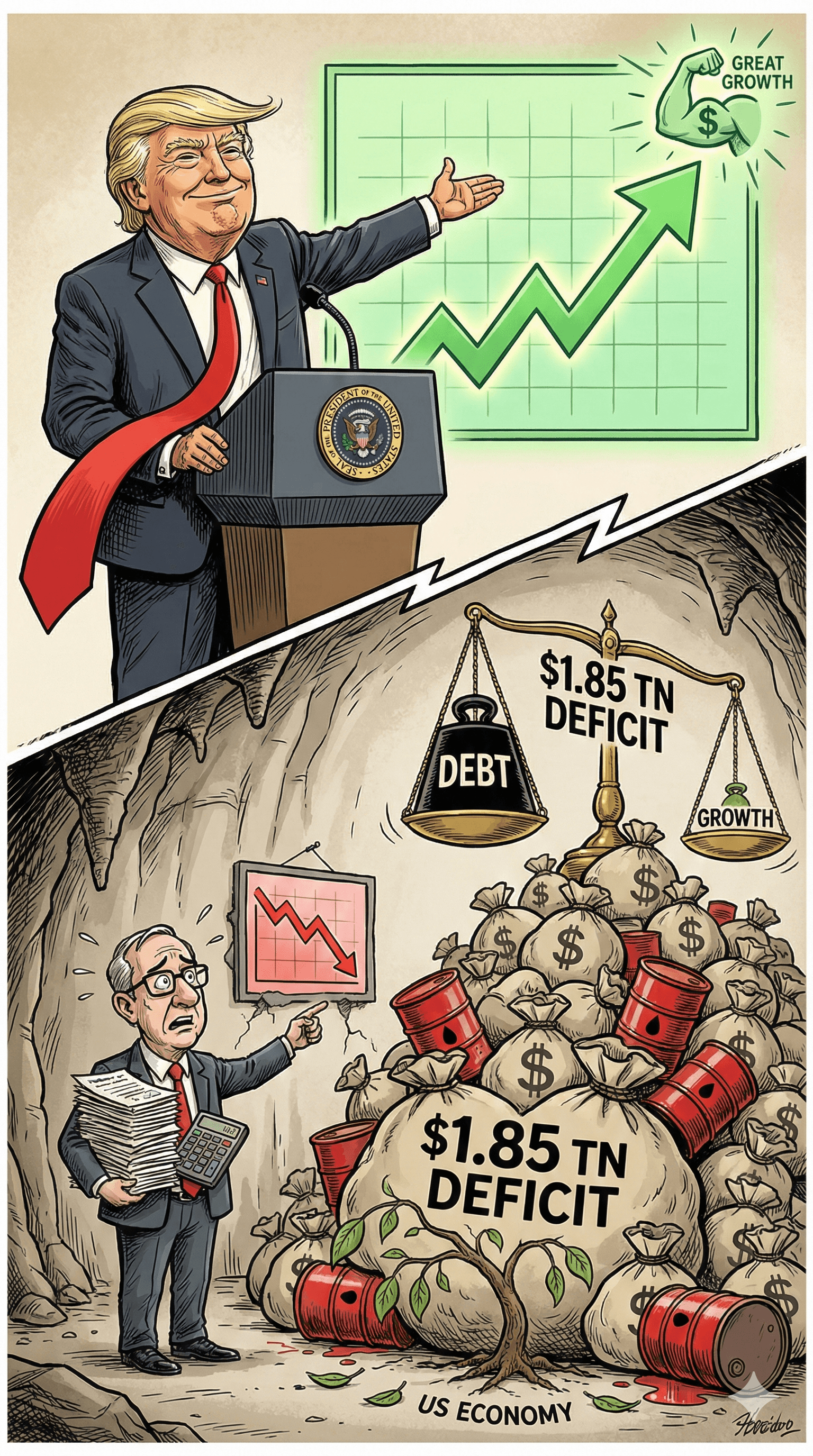
In a report released Wednesday, February 11, 2026, the nonpartisan watchdog agency forecast that the U.S. budget deficit will widen to $1.853 trillion in fiscal year 2026. The data stands in stark contrast to the White House’s narrative of "exploding" growth, setting up a significant political clash as the administration pushes forward with its "One Big Beautiful Bill" legislative agenda.
The Numbers: A Widening Fiscal Gap
The CBO’s latest Budget and Economic Outlook offers a challenging assessment of the nation's balance sheet. After a brief dip in fiscal year 2025—where the deficit settled at roughly $1.78 trillion—the gap is projected to expand again.
According to the report, the federal deficit will hit $1.853 trillion in 2026, equating to approximately 5.8% of Gross Domestic Product (GDP). This figure is historically high for an economy not currently in a recession or a major war. More alarmingly, the CBO predicts this is not a temporary spike; the deficit-to-GDP ratio is expected to average 6.1% over the next decade, significantly outpacing the historical average.
“The fiscal trajectory is clear,” the report noted, highlighting that interest payments on the national debt are poised to become one of the largest line items in the federal budget, further constraining future spending power.
The Mismatch: "Exploding" Growth vs. Economic Reality
The core of the current news cycle is the glaring disparity between these independent projections and the economic narrative promoted by President Donald Trump.
Throughout early 2026, President Trump and his economic team have touted a roaring recovery, frequently citing aggressive GDP targets of 3% to 4%, with recent administration officials suggesting first-quarter growth could top 6%. The White House credits this surge to deregulation, the extension of the 2017 tax cuts, and a boom in Artificial Intelligence (AI) infrastructure investment.
However, the CBO’s data tells a different story. The agency projects real GDP growth to remain modest, pegging 2026 growth at just 2.2%, before fading to an average of 1.8% for the remainder of the decade.
This "data mismatch" is critical because the administration’s plan to balance the budget relies heavily on revenue generated from hyper-growth. If the CBO’s more conservative numbers hold true, the tax cuts and spending measures currently on the table could balloon the national debt far faster than the White House anticipates.
Policy Implications: Tariffs and the "One Big Beautiful Bill"
The report also sheds light on the specific economic levers the Trump administration is pulling.
The "One Big Beautiful Bill": This legislative package, a cornerstone of Trump's second-term agenda, extends the 2017 tax cuts and slashes social outlays. While the CBO acknowledges this will boost short-term consumer spending and private investment, it estimates the legislation will add a staggering $4.7 trillion to U.S. deficits over the next 10 years.
Tariffs: A key component of the administration's revenue strategy involves sweeping tariffs. The CBO report confirms that these tariffs are expected to generate significant revenue—potentially reducing deficits by about $3 trillion over the decade. However, analysts warn that this comes at a cost to consumer prices and overall economic efficiency, potentially acting as a drag on the very growth the administration is banking on.
Interest Rates: The mismatch extends to monetary policy expectations. While the administration has pressured the Federal Reserve for lower rates to fuel borrowing and investment, the CBO expects interest rates on 10-year Treasury notes to remain elevated. This poses a direct challenge to Treasury Secretary Scott Bessent’s goal of shrinking the deficit-to-GDP ratio to 3%.
Expert Analysis & Future Outlook
Economists view the current standoff as a test of the U.S. dollar's resilience and investor confidence.
"The divergence between political rhetoric and hard data is wider than we've seen in years," noted one fiscal analyst. "The market is currently pricing in a 'goldilocks' scenario where growth saves the day, but the CBO is flashing a warning light that structural deficits are becoming entrenched."
The implications for the average American are significant. If growth fails to materialize as promised, the government may be forced to choose between deeper austerity measures—cutting popular services—or allowing inflation to rise as a way to erode the real value of the debt.
As the 2026 fiscal year progresses, all eyes will be on the actual quarterly GDP reports to see which version of reality—the White House’s boom or the CBO’s burden—prevails.
Impact Outlook
For Investors: Expect continued volatility in bond markets as traders digest the reality of "higher for longer" interest rates and massive Treasury issuances.
For Taxpayers: The extension of tax cuts provides immediate relief, but the long-term debt burden suggests future tax debates will be fierce.
Global Economy: The sheer size of the U.S. deficit may suck liquidity from global markets, keeping the dollar strong but pressuring emerging market economies.
#USPolitics #Economy #DonaldTrump #BudgetDeficit #CBO #Inflation #FiscalPolicy #USEconomy #GDPGrowth #GlobalMarkets #Treasury #FederalReserve