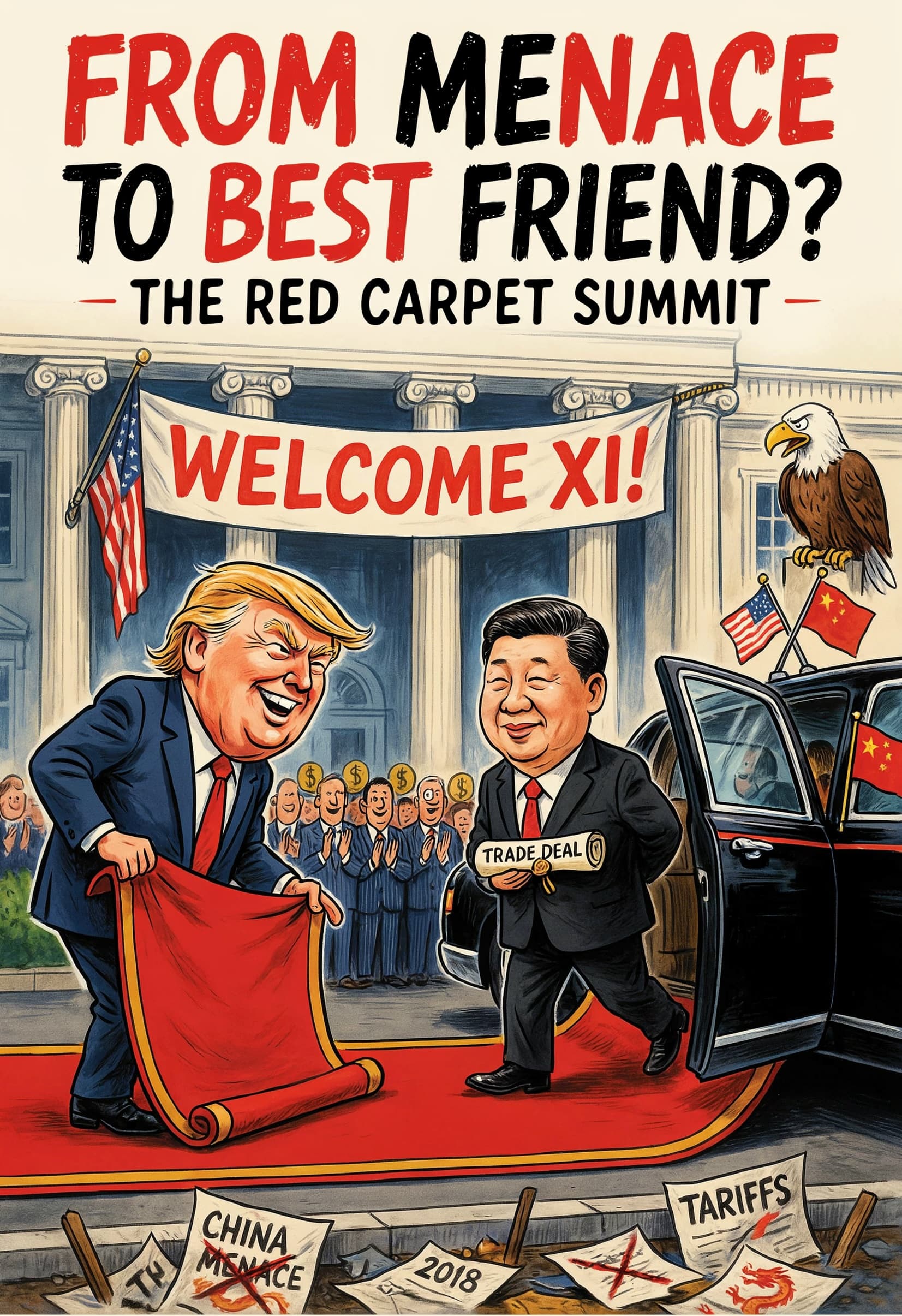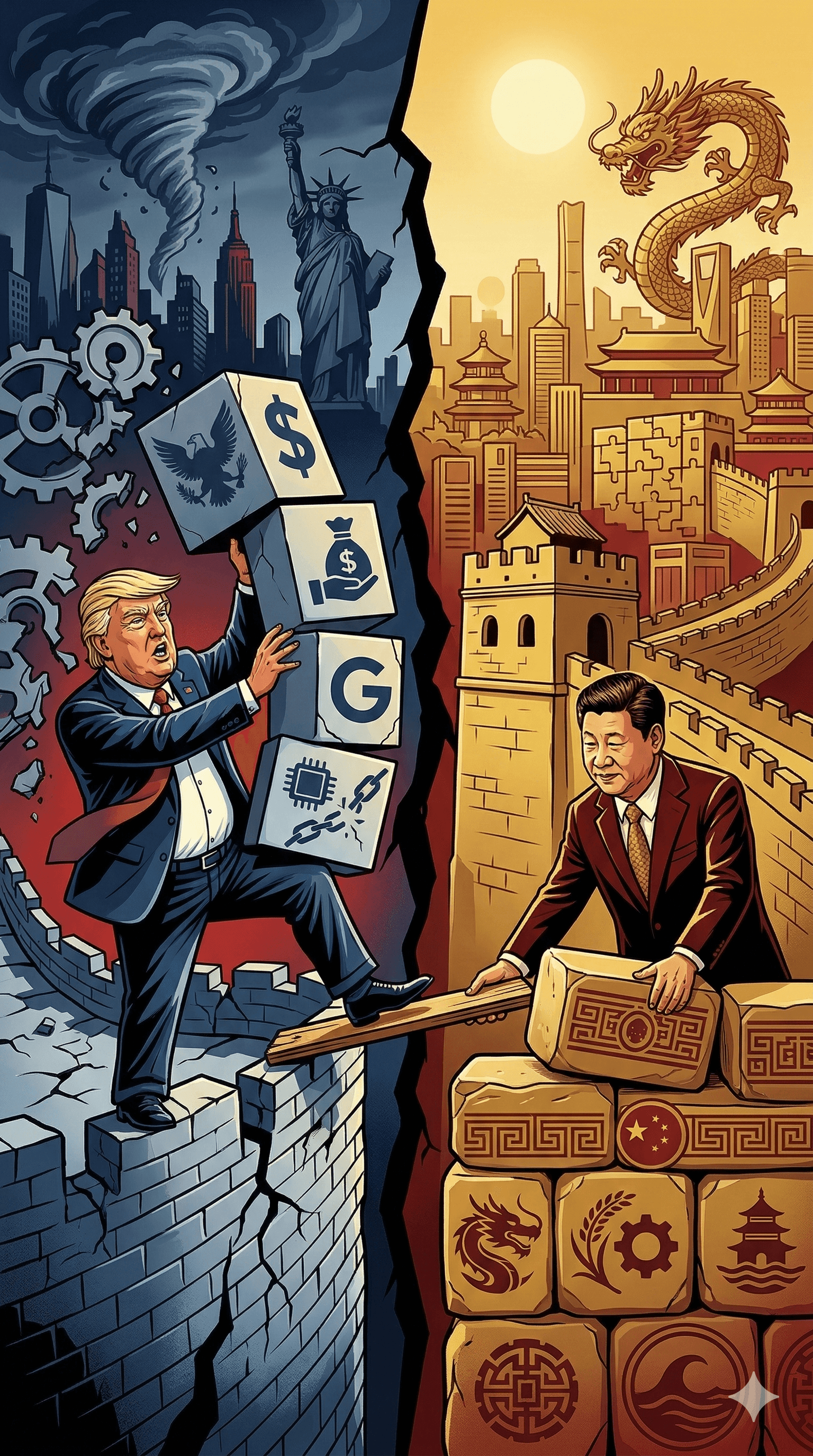
U.S. President Donald Trump is scheduled to travel to Beijing from March 31 to April 2, 2026, marking a highly anticipated diplomatic milestone as the first visit to China by a sitting American president in eight years. However, despite the historical significance of the trip, sources involved in the summit's preparation indicate that the meeting with Chinese President Xi Jinping is unlikely to deliver a major breakthrough in economic or strategic relations.
Instead of pursuing a sweeping reset in bilateral business and investment ties, both Washington and Beijing appear laser-focused on maintaining the fragile stability that has characterized the relationship between the world's two largest economies since late last year. As global supply chains and international markets watch closely, the summit is shaping up to be an exercise in managing a complex rivalry rather than resolving deeply entrenched disputes.
A Summit with Shrinking Ambitions
Initial expectations for the upcoming state visit were notably higher. Earlier this year, American business leaders strongly advocated for a large, high-level delegation of corporate executives to accompany President Trump, hoping the trip would reopen channels for direct investment and improve market access in China.
However, those ambitions have steadily diminished in the face of ongoing national security concerns, intense supply chain competition, and a fierce technological rivalry. The political and economic space required for sweeping, transformative agreements has narrowed considerably. Analysts tracking the diplomatic preparations have noted the shift in tone. Ryan Hass of the Brookings Institution recently described the upcoming trip as an “ever-shrinking state visit,” highlighting that expectations for meaningful, structural policy outcomes have actively declined as the date approaches.
The Busan Framework and Trade Realities
The upcoming Beijing summit serves as the first face-to-face engagement between the two leaders since their crucial October 2025 meeting in Busan, South Korea. Occurring on the sidelines of the Asia-Pacific Economic Cooperation (APEC) summit, the Busan meeting resulted in a temporary trade truce following months of escalating, tit-for-tat retaliations that included aggressive U.S. tariffs and sweeping Chinese export restrictions on crucial rare earth minerals.
American officials have signaled that the goal for the Beijing summit is not to initiate new confrontations over tariffs, but rather to monitor and enforce the implementation of the existing Busan agreements. For Washington, the immediate priority is preserving critical access to rare earth elements—which are essential for high-technology manufacturing and defense supply chains—and ensuring that Beijing fulfills its commitments to purchase American agricultural products, particularly soybeans.
Conversely, Beijing’s primary objective revolves around economic stabilization. Chinese leadership is seeking to protect domestic companies from increasingly stringent U.S. regulatory scrutiny and investment restrictions. While a broad economic deal is off the table, localized commercial agreements remain a possibility. Most notably, negotiators are reportedly discussing a massive commercial arrangement involving China purchasing approximately 500 narrow-body aircraft from aerospace giant Boeing. If finalized, this aviation deal could stand as the most significant tangible outcome of the three-day visit.
Navigating the Geopolitical Minefield
Beyond trade and technology, the U.S.-China relationship is deeply entangled in volatile global geopolitics. The ongoing Russia-Ukraine war and escalating conflicts in the Middle East—specifically recent U.S. and Israeli military actions against Iranian targets—loom heavily over the diplomatic proceedings.
Despite these global crises, Beijing appears determined to insulate its bilateral relationship with Washington from external shocks. Chinese Foreign Minister Wang Yi recently underscored this approach, deliberately avoiding letting the Middle Eastern conflict dominate diplomatic discussions regarding the U.S. relationship. Dr. Sun Chenghao, a U.S.-China relations researcher at Tsinghua University, noted that Beijing's strategy reflects a calculated determination to prevent regional conflicts from disrupting the overall rhythm of high-level interactions between the two superpowers.
Furthermore, the persistent fault line of Taiwan remains a highly sensitive issue. Following a November 2025 phone call between Trump and Xi, Beijing reiterated its stance on the post-World War II international framework regarding Taiwan, while the U.S. continues to balance its diplomatic commitments. Both sides are expected to reiterate their established red lines without actively escalating the rhetoric.
Diplomatic Preparations and Strategic Safeguards
Logistically, the path to the summit has not been entirely smooth. Reports indicate that Chinese officials have expressed frustration over unusually late planning and coordination from the U.S. side for a visit of this magnitude, which traditionally requires months of meticulous diplomatic choreography.
Nevertheless, official rhetoric from Beijing remains cautiously optimistic. Foreign Minister Wang Yi recently stated that the interactions between Trump and Xi have successfully "achieved overall stability after ups and downs" and provided an "important strategic safeguard" for the bilateral relationship. Emphasizing that 2026 is a "big year" for U.S.-China ties, Wang called for both nations to manage existing risks, remove unnecessary disruptions, and continuously reduce their list of contentious issues.
Outlook and Global Impact
Ultimately, the 2026 Trump-Xi summit in Beijing is not designed to alter the fundamental trajectory of U.S.-China relations. The visit is a pragmatic mechanism for managing a great-power rivalry. By prioritizing direct, high-level communication, Washington and Beijing aim to prevent their strategic competition from devolving into a deeper, more destructive economic and military confrontation.
For the global economy, this approach offers a sigh of relief. While the absence of a breakthrough means tariffs and tech restrictions will likely remain the new normal, the mutual commitment to "stability" reduces the immediate threat of a catastrophic decoupling. Markets can expect incremental commercial deals and a reaffirmation of the status quo—proving that in the current era of U.S.-China relations, avoiding a crisis is often the most significant victory either side can achieve.
#Geopolitics #USChinaRelations #TrumpVisit2026 #GlobalEconomy #TradeWar #BeijingSummit #Diplomacy #SupplyChains #AsianPolitics #InternationalTrade #NewsUpdates