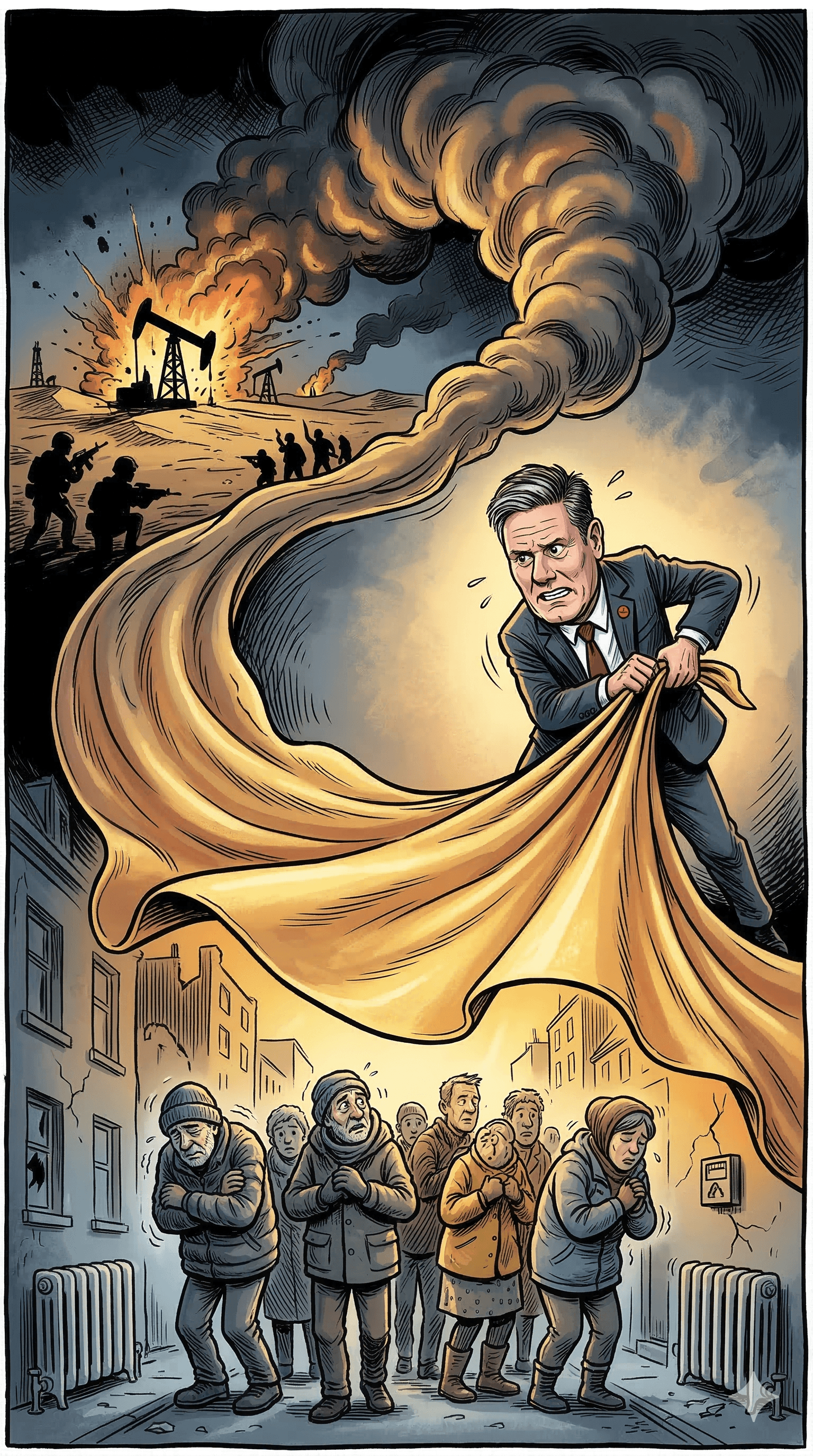
LONDON — In response to the escalating geopolitical crisis in the Middle East and its rapid impact on global energy markets, UK Prime Minister Keir Starmer has announced a £50 million energy support package. The targeted financial relief aims to shield millions of British households from soaring heating costs directly linked to the ongoing war involving Iran, the United States, and Israel.
As global oil prices experience extreme volatility, the UK government is maneuvering to prevent a renewed cost-of-living crisis, issuing strict warnings to energy suppliers against profiteering while navigating increasingly strained relations with US President Donald Trump over the military response.
The Global Catalyst: Middle East Tensions and the Strait of Hormuz
The necessity for the emergency support package stems from the severe disruption of global oil supplies. The conflict, which began with a US-Israeli military campaign against Iran, has widened significantly. In retaliation, Iranian forces have effectively closed the Strait of Hormuz, one of the world's most critical maritime chokepoints for oil and gas shipments.
With approximately 40% of European jet fuel imports typically transiting through the strait, the blockade has sent immediate shockwaves through the energy sector. Global crude oil prices have surged, but the most acute impact in the UK has been on the price of kerosene. Jet kerosene, which is chemically similar to the heating oil used by many British homes, is now trading at nearly double the price of crude oil, with Northwest European jet fuel prices recently hitting all-time highs.
Protecting Rural Homes: The £50 Million Lifeline for Heating Oil Users
While the broader energy price cap overseen by the regulator Ofgem provides some insulation for households using mains gas and electricity, homes reliant on heating oil are entirely exposed to market fluctuations.
The £50 million package (with some government releases citing up to £53 million in total allocations) is specifically designed to support these vulnerable consumers. Approximately 1.5 million homes across the UK depend on heating oil, primarily located in rural areas and prominently in Northern Ireland, where the majority of households rely on this fuel source.
Under the new plan:
England will receive £27 million via the Crisis and Resilience Fund, effective April 1.
Northern Ireland, which is disproportionately affected, will receive £17 million.
Scotland is allocated £4.6 million.
Wales will receive £3.8 million.
During a press conference at Downing Street, Sir Keir Starmer emphasized the government's commitment to shielding citizens from the economic shockwaves of the Iran war fallout. "Whatever challenges lie ahead, this Government will always support working people," Starmer stated, acknowledging the acute financial pressure mounting on families already weary from years of high inflation.
Cracking Down on Energy Profiteering
Beyond financial subsidies, the UK government is taking an aggressive regulatory stance. Following reports that some heating-oil distributors canceled existing orders only to relist them at steeply inflated prices, Downing Street has intervened.
Chancellor Rachel Reeves and Energy Secretary Ed Miliband have issued stern warnings to the industry. The government has served a "legal direction" to energy companies, mandating that they pass on savings from previously announced government policies directly to consumers.
"I will not tolerate any company exploiting the current situation to make excess profits at consumers' expense," Chancellor Reeves informed MPs. Furthermore, ministers have written to the UK and Ireland Fuel Distributors Association, reminding them of strict consumer protection regulations. Consumer advocates are actively urging households who have experienced sudden price hikes or canceled orders to report the incidents for market investigation.
Geopolitical Fallout: Navigating the UK-US Relationship
The domestic economic strategy is inextricably linked to the UK's foreign policy challenges. The Iran conflict has exposed significant friction between the Starmer administration and US President Donald Trump.
President Trump has publicly demanded that NATO allies, particularly European nations, deploy naval resources—such as minesweepers—to force open the Strait of Hormuz. Trump has implicitly threatened the future of the NATO alliance if European countries fail to assist the US in the Gulf.
Starmer has firmly resisted pressure to unconditionally commit Royal Navy warships or join offensive US strikes against Iran. "While taking the necessary action to defend ourselves and our allies, we will not be drawn into the wider war," Starmer declared. He noted that the UK is working closely with European partners on a "viable collective plan" to restore freedom of navigation and ease economic impacts, but he actively distanced his administration from Trump's transactional approach to military alliances.
Cabinet minister Pat McFadden reinforced this stance, stating that the historic UK-US partnership is robust enough to "outlast all the personalities involved," signaling a deliberate boundary between British interests and current US executive demands.
Accelerating the Green Transition
Interestingly, the crisis has hardened the Labour government's resolve regarding domestic energy production. While political opponents on the right, alongside President Trump, have urged the UK to drastically increase oil and gas drilling in the North Sea to counteract the crisis, Starmer and Energy Secretary Ed Miliband are taking the opposite approach.
The Prime Minister is using the Iran energy shock as a catalyst to accelerate the UK's transition to renewable energy. By framing solar farms and wind turbines as the ultimate route to national "independence and security," Starmer is arguing that only a permanent shift away from fossil fuels will protect the British economy from future geopolitical volatility in the Middle East.
Outlook and Impact
As the conflict in the Middle East shows little sign of immediate de-escalation, the effectiveness of the £50 million energy support package will be rigorously tested. For the 1.5 million UK households reliant on heating oil, the funds will provide crucial short-term relief during a period of intense price instability.
However, political analysts suggest that if the Strait of Hormuz remains contested and global oil prices continue to climb, the Starmer government may be forced to introduce broader economic interventions before the summer. The dual challenge of managing domestic inflation while navigating a fragile international security environment will undoubtedly define the next phase of Starmer's premiership.
#news #geopolitics #UKeconomy #KeirStarmer #energycrisis #IranWar #MiddleEast #costofliving #heatingoil #UKpolitics #Trump #globalmarkets