On September 8, 2026, Yemen’s Houthi forces launched a significant wave of drone and missile strikes targeting Saudi Arabian military and energy infrastructure. The attacks immediately tested the new Mecca Joint Defence Agreement, a mutual defense pact signed just a month prior. Yet, as allied capitals issued cautious statements regarding their treaty obligations, a provocative and entirely unconfirmed media report emerged: an assertion that Riyadh quietly reached out to Israel for help.
The Unconfirmed Israel Hayom Report
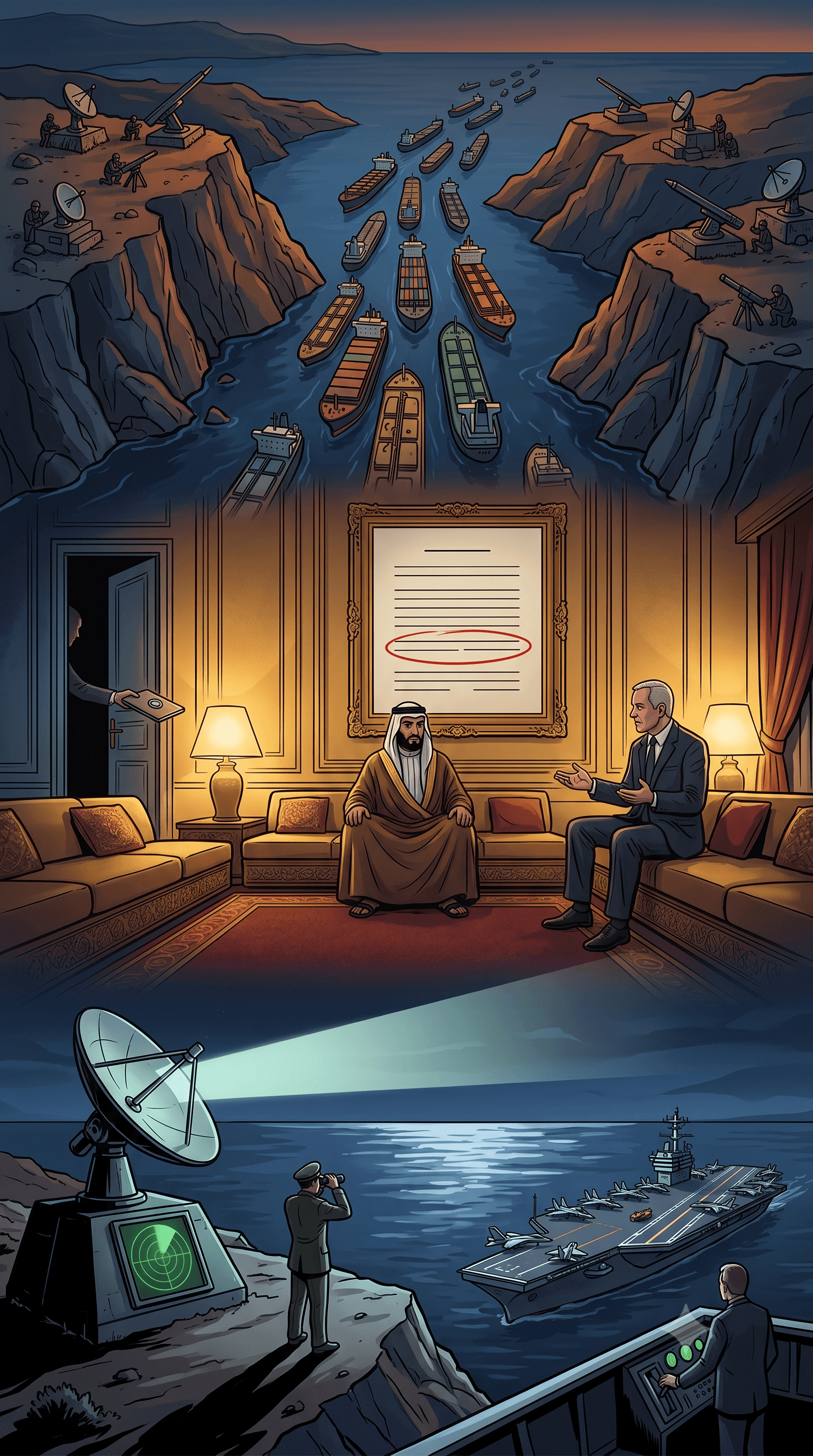
The central claim that Saudi Arabia asked Israel for assistance stems exclusively from a single report published by the Hebrew-language daily Israel Hayom on September 13, 2026. Citing unnamed diplomatic officials in the region and the Gulf, unnamed American officials, and an unidentified official familiar with the matter, the outlet alleged that Riyadh requested Israeli intelligence assistance and support to stop Houthi forces from blocking the vital Bab al Mandeb strait.
It is critical to state plainly and prominently that this claim remains strictly an anonymously sourced media report. A thorough review of public records reveals that no Saudi, Israeli, Pakistani, or United States government official has confirmed this alleged back-channel request on the record.
Because Saudi Arabia and Israel do not have formal diplomatic relations, any such security request would represent a highly irregular political maneuver. However, in geopolitics, states lacking formal ties sometimes seek quiet intelligence cooperation rather than overt military help. Covert intelligence sharing offers plausible deniability, allowing a government to benefit from advanced foreign technological capabilities without triggering the severe domestic and regional backlash that would inevitably accompany public military coordination with an unrecognized state.
According to the unconfirmed Israel Hayom report, the United States was deeply involved in navigating the crisis. The publication claimed that Washington was weighing airstrikes on Houthi positions overlooking the strait, and that CENTCOM commander Admiral Brad Cooper had been sent to Saudi Arabia to assess the situation. Furthermore, the Israel Hayom report asserted that President Donald Trump was reluctant to provide direct military assistance to Riyadh. None of these specific claims regarding U.S. military deliberations or presidential reluctance have been publicly verified by the White House or the Pentagon, and they remain solely attributed to the Israel Hayom publication.
Why the Bab al Mandeb Strait is a Global Lifeline
The Israel Hayom report focused heavily on the Bab al Mandeb strait, and its geography explains why this waterway is an intense focal point. The strait is a narrow maritime chokepoint connecting the Red Sea to the Gulf of Aden and the Arabian Sea. It serves as the southern gate to the Suez Canal, making it an irreplaceable artery for global shipping and oil transit between Europe, the Middle East, and Asia.
If militant forces were to successfully block this waterway, it would force international cargo ships and oil tankers to reroute around the entire African continent. This would drastically increase global shipping times, heavily inflate maritime transit costs, and likely trigger a severe spike in global energy prices.
Houthi Strikes and the Diplomatic Window
The September 8 drone and missile strikes on Saudi military and energy infrastructure marked a severe escalation in regional hostilities. However, despite the intensity of the attacks and speculation from regional analysts, Saudi Arabia has not publicly declared that political negotiations with the Houthis are dead.
In fact, responding publicly on the day of the strikes, Saudi Foreign Minister Prince Faisal bin Farhan warned the Houthis against escalation but explicitly stated that "the path of diplomacy in dealing with the Houthis remains open." While unnamed officials have suggested in various regional outlets that Riyadh is preparing for prolonged military engagement, there is no on-the-record confirmation from the Saudi government stating that political negotiations are no longer viable.
The Mecca Pact: Testing Strategic Commitments
The Houthi strikes occurred in the immediate shadow of the Mecca Joint Defence Agreement, signed by Saudi Arabia, Pakistan, and Turkey on August 7, 2026. The foundational premise of the pact is that an attack on one signatory is treated as an attack on all.
However, mutual defense pacts are rarely automatic tripwires for all-out war. Such agreements typically oblige signatories to consult one another and respond in a manner they deem proportional and necessary—which can range from deploying combat troops to merely sharing intelligence or diplomatic support. Crucially, the full text of the Mecca Joint Defence Agreement has not been publicly published, leaving its exact legal triggers, institutional mechanisms, and operational obligations completely shielded from public scrutiny.
Following the September 8 strikes, Pakistan did not launch counter-operations against the Houthis. Addressing the crisis, Pakistani Defence Minister Khawaja Muhammad Asif stated that Pakistan is bound by the terms and conditions of the pact and will honor them in case there is a need. Clarifying the immediate operational reality, Foreign Ministry spokesman Sajjad Haider Khan subsequently stated that there is no discussion of this kind regarding direct military action against the Houthis.
Turkey, the other major signatory to the Mecca framework, has similarly not committed to direct military retaliation following the September 8 attacks. Turkish officials have previously indicated that the pact operates much like NATO—meaning any direct military intervention would require a member state to formally invoke the treaty and define the specific type of help it needs. To date, there is no public record of Saudi Arabia invoking the pact for direct military intervention.
Outlook and Regional Impact
As of mid-September 2026, Saudi Arabia is navigating an increasingly volatile security environment. While bound by a newly minted Islamic defense alliance, the immediate military restraint shown by its treaty partners highlights the inherent limitations of unratified, largely untested mutual defense frameworks. Concurrently, the explosive Israel Hayom report—though completely unconfirmed by any government—underscores the intense, quiet anxiety surrounding the Bab al Mandeb strait. Whether Riyadh relies heavily on conventional diplomacy, leans on its Mecca Pact allies, or covertly utilizes back-channel intelligence networks, the primary objective remains unchanged: securing the vital economic lifelines of the Red Sea against escalating militant threats.