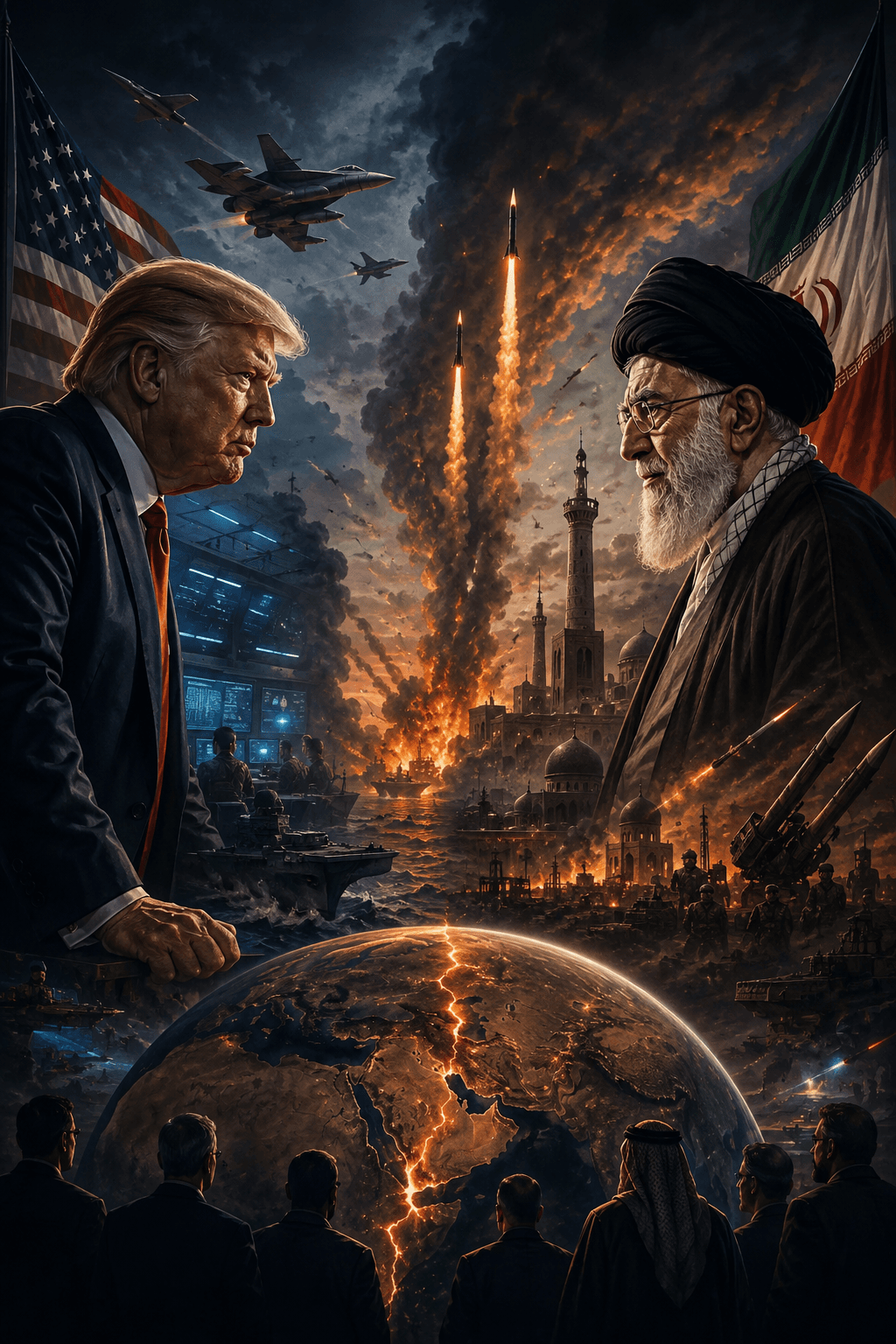
A fragile month-long ceasefire between the United States and Iran is facing its most dangerous test yet. On Thursday, May 7, 2026, the two nations exchanged direct military fire in the highly contested Strait of Hormuz. As global oil markets spike and supply chains brace for impact, the sudden escalation raises a critical question: Are Washington and Tehran on the brink of resuming full-scale war? This clash is not merely a regional skirmish; it is a global economic flashpoint with the potential to paralyze one-fifth of the world’s oil supply and ignite a broader Middle Eastern conflagration.
Background: The 2026 US-Iran War and the April Ceasefire
The current crisis cannot be understood without examining the unprecedented escalation that defined the first quarter of 2026. On February 28, the United States, under President Donald Trump, alongside Israeli forces, launched a campaign that the US dubbed "Operation Epic Fury". This massive operation of nearly 900 joint strikes in its first 12 hours targeted Iranian missile infrastructure, air defenses, and senior leadership. The initial wave of strikes resulted in the assassination of Iran's Supreme Leader Ali Khamenei, fundamentally altering the balance of power in the Middle East.
In response, Iran unleashed a barrage of drones and ballistic missiles targeting US military bases, Israeli territory, and US-allied Arab states, while simultaneously moving to block the strategic Strait of Hormuz. After six weeks of grueling conflict, a two-week conditional ceasefire was brokered by Pakistan on April 7. The truce temporarily halted the direct kinetic war but left the deepest geopolitical rifts unresolved, notably Iran's nuclear enrichment capabilities and the blockade of the Persian Gulf.
The Latest Escalation: Project Freedom and the Exchange of Fire
The ceasefire has been steadily deteriorating since early May. The breaking point arrived as the US launched "Project Freedom," a naval initiative aimed at guiding stranded commercial vessels out of the Strait of Hormuz.
On Thursday, the US military reported that it targeted missile and drone sites on Iranian territory. According to US Central Command, these were defensive strikes executed in retaliation for unprovoked Iranian attacks against three US Navy destroyers transiting the strait.
Conversely, Iran’s top joint military command accused the US of initiating the violence. Tehran claims the United States violated the ceasefire by targeting an Iranian oil tanker and launching air attacks on civilian areas on Qeshm Island and coastal regions like Bandar Khamir Sirik. In retaliation, Iran stated it launched missiles, drones, and small boats against US military vessels east of the Strait and south of the port of Chabahar.
Despite the intensity of the exchange, both sides appeared to carefully calibrate their rhetoric in the immediate aftermath. Iranian state media quickly reported that the situation on its islands and coastal cities was "back to normal". Meanwhile, President Trump sought to downplay the severity of the clash. Speaking to reporters in Washington, he described the exchange as a mere "love tap," insisting that the ceasefire remains firmly in effect while negotiations continue.
Geopolitical Stakes and Diplomatic Gridlock
The Actors Involved
The geopolitical web surrounding this conflict is vast and incredibly complex.
The United States: The Trump administration is attempting to enforce a "dual blockade" while demanding Iran agree to a permanent halt to nuclear enrichment and the immediate reopening of the Strait of Hormuz.
Iran: Having suffered massive military and leadership losses, Tehran is using its asymmetric naval capabilities and regional proxy networks as leverage to demand an end to the US naval blockade and relief from crushing sanctions.
Israel: Operating in parallel, Israel continues its military campaign against Iranian proxies, notably intensifying strikes against Hezbollah in Lebanon. Israeli Prime Minister Benjamin Netanyahu has held consultations with US officials amid concerns over possible last-minute concessions to Tehran.
Regional Mediators: Pakistan and Oman are urgently trying to salvage a diplomatic window, shuttling proposals between Washington and Tehran to prevent a total collapse of the truce.
The Diplomatic Sticking Points
Negotiations are currently deadlocked over core strategic issues. The United States demands that Iran surrender its ballistic missile programs, secure its enriched nuclear material, and allow unhindered access to the Strait of Hormuz. Tehran views these demands as an infringement on its sovereignty and has stated that any American intervention in the new maritime systems of the Strait is a violation of the ceasefire.
Global Economic and Strategic Consequences
The exchange of fire in the Strait of Hormuz sent immediate shockwaves through the global economy.
Oil Markets and Supply Chains
Within hours of the clash, oil prices jumped as markets reacted to the instability. Prior to the conflict, approximately one-fifth of the world's oil and gas supply passed through this narrow waterway. The ongoing "dual blockade"—where the US Navy restricts Iranian ports while Iran threatens commercial shipping—has created a massive logistical nightmare for international trade. If the ceasefire collapses entirely, the sustained closure of the Strait could trigger a severe global energy crisis, driving up inflation and straining economies worldwide.
Regional Security and Military Stability
The conflict is drastically redrawing the security architecture of the Middle East. Neighboring nations like the United Arab Emirates have reported intercepting incoming Iranian missiles and drones, pulling them deeper into the crossfire. Furthermore, Saudi Arabia and Kuwait have reportedly lifted restrictions on US military access to their bases and airspace, signaling a regional consolidation against Tehran. If the US-Iran war restarts in full force, the spillover effect could engulf Iraq, Lebanon, Syria, and the broader Gulf region, leading to a catastrophic multi-front war.
Outlook: What Happens Next?
The Middle East currently stands on a knife's edge. Diplomatic momentum and military pressure are moving on parallel, highly volatile tracks. Officials in Pakistan suggest that the US and Iran are inching closer to a short-term memorandum that could halt hostilities for 30 days, allowing space to address nuclear limits, security in the Strait of Hormuz, and sanctions relief.
However, the margin for error is virtually nonexistent. President Trump has issued stark warnings that the US military is prepared to hit Iran "a lot more violently" if a deal is not reached quickly. At the same time, Iran's military apparatus remains highly mobilized and capable of inflicting significant damage on US naval assets and regional allies.
The coming days will dictate whether the May 7 exchange of fire was a final violent tremor before a historic diplomatic settlement, or the spark that reignites one of the most devastating geopolitical conflicts of the 21st century. The world watches the Strait of Hormuz with bated breath, knowing that the difference between peace and a global economic shock hangs entirely in the balance.