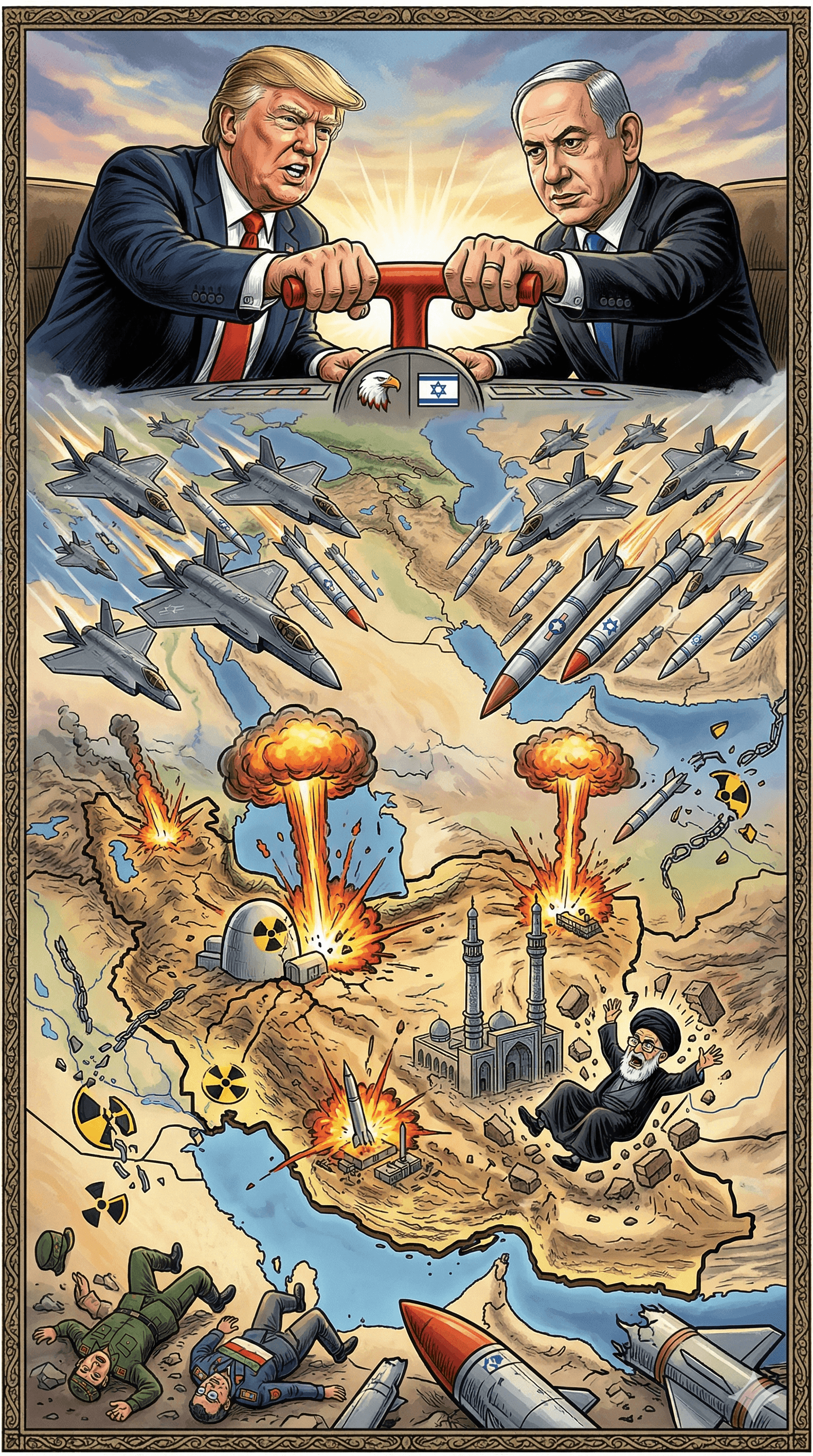
TEHRAN / WASHINGTON (Feb 28, 2026) — In a dramatic and sweeping escalation of Middle Eastern hostilities, the United States and Israel launched massive joint military strikes against the Islamic Republic of Iran on Saturday. Explosions rocked the Iranian capital of Tehran in broad daylight, marking a direct and unprecedented confrontation.
US President Donald Trump confirmed American involvement shortly after the first blasts were reported, announcing that the US had commenced "major combat operations" aimed at "eliminating imminent threats" from the Iranian regime.
The joint strikes, internally dubbed "Operation Lion's Roar" by Israel, follow weeks of intense military buildup, the collapse of nuclear negotiations in Geneva, and mounting international anxiety over the prospect of a full-scale regional war.
Explosions Rock Tehran in 'Operation Lion's Roar'
The coordinated US-Israel joint strikes on Iran began on Saturday morning, catching the Iranian capital off-guard with a rare daylight assault. Plumes of thick black smoke were seen rising over downtown Tehran, with initial reports indicating that missiles struck deeply sensitive and strategic locations.
According to regional media and security sources, the bombardments targeted military facilities, intelligence ministries, and the homes of senior officials. Notably, the first reported blast occurred near the office compound of Iran's Supreme Leader, Ayatollah Ali Khamenei. While it remains unclear if the 86-year-old leader was present, sources indicate he has not been seen publicly in recent days and was likely transferred to a secure underground location prior to the strikes.
The precision strikes are being carried out by a combination of air and naval assets. While the full scope of the ongoing operation remains classified, unnamed security sources indicated that the initial phase of the joint attack is planned to last for several days.
Trump's Declaration: "Eliminating Imminent Threats"
Shortly after the first missiles hit Tehran, President Donald Trump released an eight-minute video statement on his Truth Social platform, formally taking responsibility for the US role in the attack.
"Our objective is to defend the American people by eliminating imminent threats from the Iranian regime, a vicious group of very hard, terrible people," Trump stated. He cited Iran's continued pursuit of nuclear capabilities and its development of long-range ballistic missiles as the primary catalysts for the military intervention.
In some of his most aggressive rhetoric to date, Trump laid out a clear operational objective: the total destruction of Iran's offensive military infrastructure. “We are going to destroy their missiles and raze their missile industry to the ground. We're going to annihilate their navy," he warned, acknowledging that the operation carries the risk of American casualties.
A Call for Regime Change
Moving beyond military objectives, Trump actively encouraged the collapse of the Iranian government. He issued a stark ultimatum to the Islamic Revolutionary Guard Corps (IRGC) and local police forces, urging them to lay down their arms in exchange for "complete immunity" or face "certain death."
Appealing directly to the Iranian public—who recently engaged in massive nationwide anti-government protests in January 2026—Trump urged citizens to seize the moment. "When we are finished, take over your government. It will be yours to take. This will be probably your only chance for generations," the President said.
Israel Declares State of Emergency
Simultaneous to the strikes on Tehran, Israel braced for immediate retaliation. Israeli Defense Minister Israel Katz confirmed the country had launched a "preemptive strike against Iran to remove threats to the State of Israel."
Katz immediately declared a state of emergency across the entire country, warning citizens that a retaliatory drone and missile barrage from Iran was expected in the "immediate future." Sirens blared across major Israeli cities, alerting the public to prepare for incoming fire and to stay close to designated bomb shelters.
Israel has implemented drastic defensive measures in anticipation of the fallout:
Airspace Closed: The Israel Airports Authority completely shut down the country's airspace to all civilian flights.
Hospital Alerts: The Israeli Health Ministry instructed all hospitals to move operations to fortified underground facilities and discharge non-critical patients to free up beds for potential mass casualties.
Intelligence Warfare: Israel's Mossad intelligence agency launched a dedicated Persian-language Telegram channel, urging the Iranian public to document the strikes and telling them, "Our Iranian brothers and sisters, you are not alone."
The Build-Up: Failed Diplomacy and Nuclear Tensions
The US-Israel attack on Iran is the culmination of months of deteriorating diplomatic relations and a massive American military buildup in the Middle East. Tensions had been simmering since June 2025, when the US and Israel engaged in a 12-day air war targeting key Iranian nuclear facilities.
Despite those previous strikes, Western intelligence claimed Tehran was rapidly rebuilding its nuclear program and inching closer to weapons-grade uranium enrichment. In an attempt to avert war, last-minute diplomatic talks were held between US and Iranian delegations in Geneva this week. However, the negotiations ended inconclusively on Thursday.
On Friday, President Trump expressed his frustration, stating he was "not happy" with the negotiations and warning that military force remained heavily on the table. Despite frantic last-ditch mediation efforts by Omani Foreign Minister Sayyid Badr Albusaidi, the diplomatic window firmly closed by Saturday morning.
The US had already positioned a massive armada in the region to back up its threats, including multiple aircraft carrier strike groups, such as the USS Abraham Lincoln, and heavily armed guided-missile destroyers.
Outlook and Regional Impact
The Middle East now stands on the precipice of a devastating, wide-ranging conflict. As the US and Israel conduct major combat operations, the immediate question is how—and with what magnitude—Iran and its regional proxy network (including Hezbollah in Lebanon and the Houthis in Yemen) will respond.
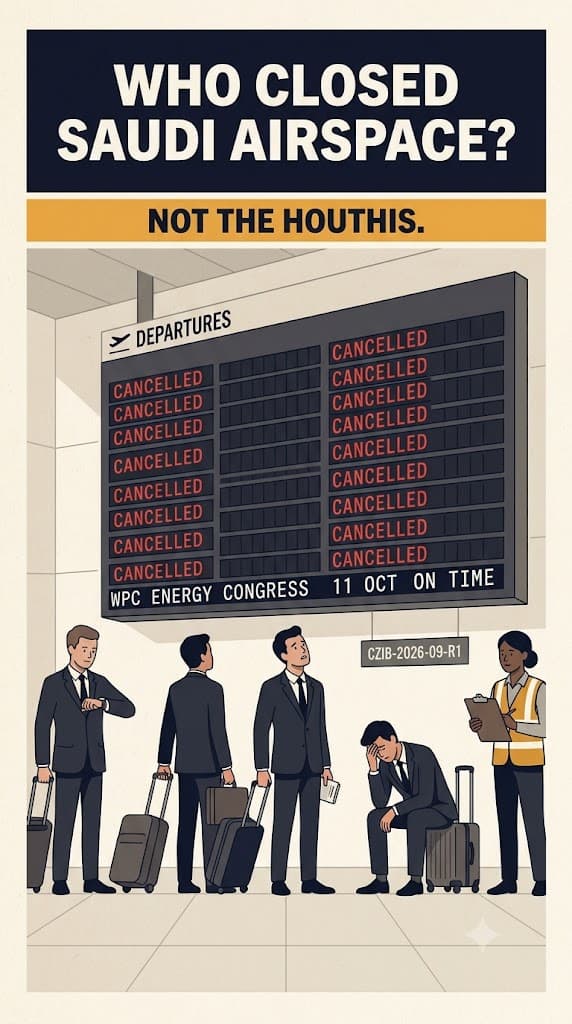
Neighboring countries are already bracing for the spillover. Iraq officially closed its airspace on Saturday morning, and several foreign embassies across the Middle East, including the US Embassy in Qatar, have ordered personnel to shelter in place. Furthermore, US Secretary of State Marco Rubio formally designated Iran as a “State Sponsor of Wrongful Detention,” urging all Americans to leave Iran and Israel immediately.
With the Trump administration explicitly calling for the overthrow of the Iranian government and the destruction of its military apparatus, the conflict has moved far beyond a limited tactical strike. The coming days will determine whether this joint operation will successfully neutralize Iran's nuclear and missile programs, or if it will plunge the entire region into an intractable, multi-front war.
#Geopolitics #USIranConflict #IsraelNews #Trump #MiddleEastCrisis #Tehran #BreakingNews #GlobalEconomy #WorldNews #MilitaryConflict