The global supply chain continues to navigate complex geopolitical and economic headwinds, yet U.S. import demand is showing remarkable resilience. According to the latest data released by supply chain technology provider Descartes Systems Group, US container imports fell 6.5% in February 2026 compared to the same month last year.
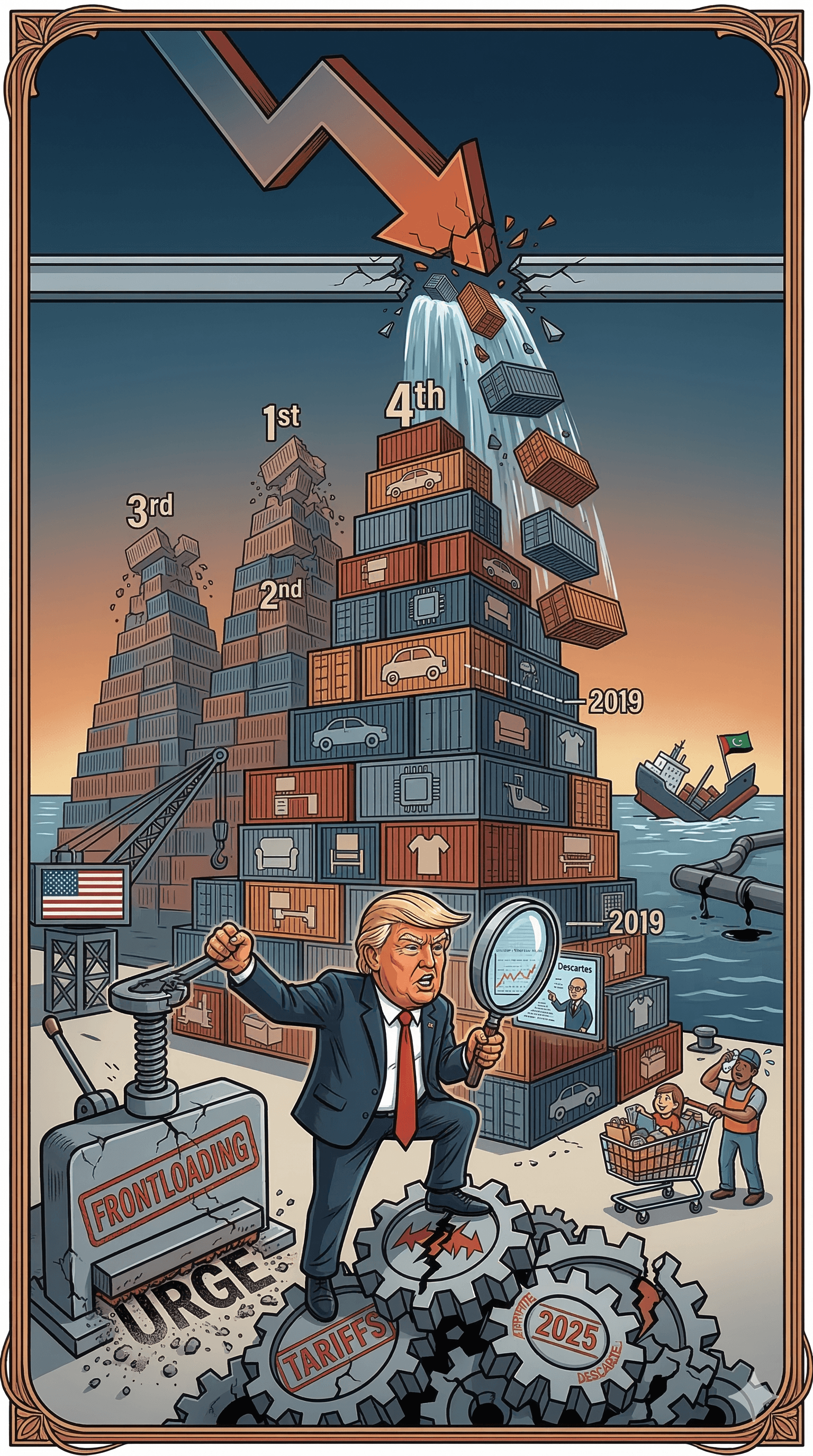
Despite this year-over-year contraction and a traditional month-over-month seasonal dip, total volume still ranked as the fourth-highest February on record. This performance underscores a stabilization in global trade, suggesting a shift away from the panic-driven surges of recent years toward a more normalized, albeit cautious, logistics environment.
Breaking Down the February 2026 Container Import Data
In February 2026, U.S. seaports processed a total of 2,093,422 twenty-foot equivalent units (TEUs), the standard measure for container volume. This figure represents a 9.7% decline from January 2026, equating to a drop of 225,301 TEUs. While a near 10% month-over-month decrease might seem steep, logistics experts at Descartes note that this aligns perfectly with typical seasonal patterns following the winter holiday shopping season and the manufacturing slowdown associated with the Lunar New Year.
Furthermore, the fact that US container imports fell 6.5% year-over-year must be viewed within historical context. February 2026 volumes remained robust enough to secure the position of the fourth-strongest February in supply chain history. Notably, when compared to pre-pandemic benchmarks, the current volume sits comfortably at 17.0% above February 2019 levels. This long-term growth trajectory indicates that fundamental U.S. consumer and industrial demand remains structurally sound.
The End of "Frontloading": Returning to Normalized Trade Patterns
A critical driver of the year-over-year decline is the absence of "frontloading"—a defensive supply chain strategy heavily utilized in early 2025. Last year, importers aggressively accelerated their shipments to stockpile goods ahead of anticipated universal tariffs proposed by the U.S. administration. This maneuvering artificially inflated February 2025's container import data.
In contrast, the landscape in early 2026 presents a much different picture. According to the Descartes report, importers have adapted to the ongoing policy uncertainty rather than rushing shipments. Following a recent 6-3 Supreme Court decision curtailing the use of emergency powers for sweeping global tariffs, the regulatory environment has shifted. Consequently, the dip in container imports is interpreted not as a sudden collapse in consumer demand, but as a return to normalized trade behaviors. Supply chain managers are operating within the current geopolitical reality, prioritizing steady inventory optimization over panic-buying.
Origin Shifts: Declines Across Major Asian Manufacturing Hubs
The February drop in US container imports was reflected broadly across the top countries of origin. Combined imports from the top 10 sourcing nations fell by 9.4% month-over-month, confirming a widespread seasonal pullback rather than isolated, country-specific trade breakdowns.
China, the largest source of U.S. containerized imports, saw its volume decrease by 5.5% from January, shedding 42,531 TEUs to land at 728,562 TEUs for the month. Despite this numeric drop, China's overall share of U.S. container imports actually increased slightly to 34.8%. This occurred because other major Asian manufacturing hubs experienced even steeper declines in their export volumes to the U.S.
For instance, container imports from Thailand plummeted by 19.9%, India dropped by 17.5%, South Korea saw a 17.0% decline, and Vietnam fell by 11.6%. Interestingly, among the top trade partners, only a few bucked the downward trend; imports from Germany grew by 5.5%, while Hong Kong saw a marginal 0.4% increase.
Navigating Ongoing Geopolitical and Supply Chain Risks
While the sheer volume of U.S. container imports suggests domestic resilience, the global logistical landscape remains fraught with external risks. Jackson Wood, Director of Industry Strategy at Descartes, highlighted that although underlying demand is relatively stable, external pressures are forcing logistics planners to stay highly vigilant.
"The military conflict in the Middle East, evolving U.S. tariffs and ongoing trade tensions have increased routing, cost and policy uncertainty for importers," Wood stated in the March report.
The geopolitical situation in the Middle East has severely impacted maritime trade routes. Heightened risks surrounding the Strait of Hormuz, alongside ongoing carrier avoidance of the Red Sea and Suez Canal route due to regional instability, continue to extend transit times around the Cape of Good Hope. These diversions add friction and significant cost to global shipping. Additionally, trade conditions are being continually reshaped by policy shifts, including revised U.S.-India tariff terms and transatlantic friction.
Port Operations Show Resilience
Despite these macroeconomic and geopolitical headwinds, domestic logistics infrastructure has handled the February cargo flow efficiently. Descartes reported that port transit delays across the U.S. showed only mixed, moderate changes last month.
There were no signs of the widespread congestion that crippled supply chains during the pandemic era. Some major West Coast gateways experienced slight wait-time increases, but these were largely offset by operational improvements in the Pacific Northwest and the Gulf Coast. The ability of U.S. seaports to fluidly manage over 2 million TEUs in a single month demonstrates significantly improved operational elasticity and infrastructure management.
Economic Outlook and Supply Chain Impact
Looking ahead, the news that US container imports fell 6.5% in February should not trigger economic alarm bells. Instead, it signals a maturing supply chain landscape where trade stability coexists with heightened risk management. Importers are expected to remain highly focused on supply chain resilience—leveraging technology and data to navigate disruptions, manage cost exposures, and maintain flexibility.
While spring is traditionally a period of volume recovery, geopolitical developments and ongoing trade policy adjustments will dictate whether 2026 import levels eventually match the historic highs of previous years. For now, the U.S. economy continues to drive historically strong, albeit seasonally adjusted, global trade volumes.
#USImports #SupplyChain #Logistics #DescartesReport #GlobalTrade #Economy #ContainerShipping #Geopolitics #SupplyChainManagement #MaritimeTrade #Tariffs #FreightNews