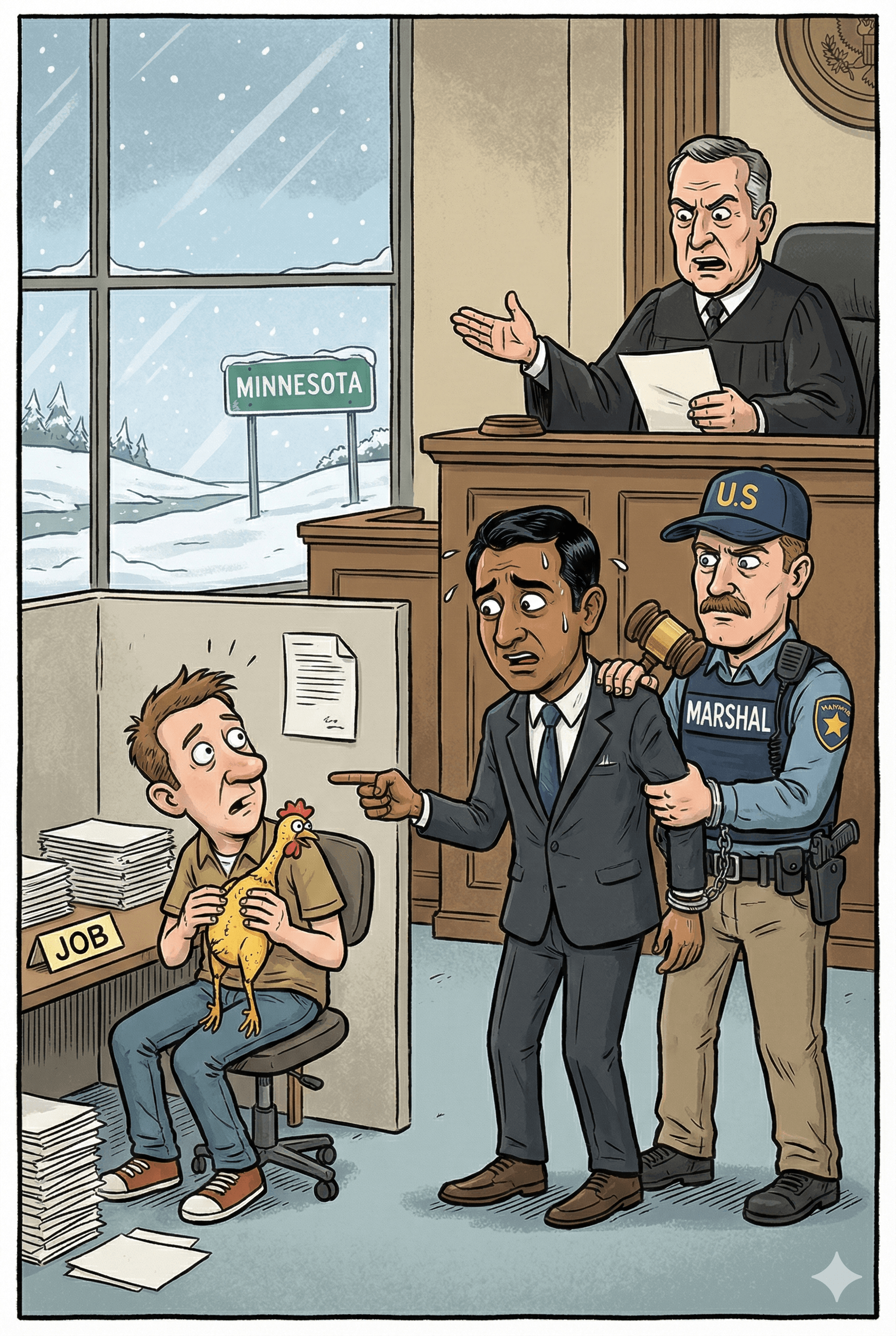
A Brazen Corporate Fraud Uncovered in Minnesota
A federal jury in Minnesota has convicted a former Indian-American data analytics executive of orchestrating a sophisticated corporate fraud and kickback scheme that siphoned more than $1.2 million from his employer. Following a comprehensive six-day trial in the U.S. District Court in Minneapolis, 47-year-old Karan Gupta was found guilty of conspiracy to commit wire fraud, ten individual counts of wire fraud, and one count of money laundering conspiracy.
The conviction brings to light a multi-year "ghost employee" scam executed during Gupta’s tenure as a senior director at Optum, Inc., a major healthcare services subsidiary of UnitedHealth Group. By manipulating the corporate hiring process to employ an unqualified friend for a high-paying, no-show job, Gupta exploited structural weaknesses in corporate oversight and enriched himself at the company's expense.
The Anatomy of the 'Unqualified Friend' Scheme
The fraudulent operation was set into motion in 2015. At the time, Gupta was already earning a lucrative annual salary exceeding $260,000. Leveraging his senior management position, he initiated the hiring process to place a lifelong friend into a managerial data engineering role at Optum. According to the Department of Justice (DOJ), the friend was fundamentally unqualified for the technical rigors of the data analytics position.
To bypass internal human resources protocols and screening mechanisms, Gupta fabricated a false resume on his friend's behalf. Once hired, the unqualified friend was strategically placed under Gupta’s direct supervision. For nearly four years, the friend functioned entirely as a ghost employee. Court records and trial testimonies revealed that he performed virtually no work for the healthcare giant. The employee rarely interacted with colleagues, sent an anomalous dearth of emails, and frequently failed to log into his Optum-issued computer for weeks at a time. Despite this staggering lack of productivity, he continuously collected a corporate salary that started at over $100,000 per year.
Wire Fraud and Money Laundering Mechanics
The core motivation for securing the unqualified friend's employment was a pre-arranged, illicit kickback agreement. Gupta demanded that more than half of the ghost employee's salary be funneled directly back to him.
To conceal the financial flow and execute the money laundering conspiracy, the two men devised a transcontinental financial setup to hide the wire fraud:
Initial Cash Transfers: In the early stages of the scheme, the friend withdrew cash from his personal bank account in New Jersey and deposited it into accounts accessible to Gupta, who was based in California.
The Debit Card Strategy: To streamline the fraud and minimize a suspicious paper trail, the friend eventually opened a new, dedicated checking account specifically to receive his Optum direct deposits.
Cross-Country Withdrawals: The friend then mailed the debit card linked to this new account across the country to Gupta. Gupta retained the card in California, routinely using it to withdraw his share of the fraudulent corporate funds directly from ATMs.
This calculated effort to obscure the origin and destination of the stolen funds formed the foundation of the money laundering and wire fraud charges brought forth by federal prosecutors.
Discovery, Investigation, and Legal Ramifications
The multi-year scheme operated undetected by Optum's internal audits until November 2019. Ironically, the ghost employee arrangement was not the initial catalyst for Gupta's downfall. Gupta was terminated by Optum late in 2019 in connection with an entirely separate and unrelated fraud allegation.
Following his termination, Optum launched a comprehensive internal investigation into his past activities, departmental budget, and managerial oversight. The glaring anomalies surrounding the unqualified friend's employment record were swiftly uncovered. Recognizing the severity and criminal nature of the financial losses, Optum referred its findings to federal law enforcement authorities.
The FBI's Minneapolis Field Office spearheaded the subsequent criminal investigation. During the trial in Minnesota, prosecutors meticulously detailed the electronic trail of wire transfers, ATM withdrawals, and fabricated employment records. U.S. Attorney Daniel N. Rosen emphasized the severity of the betrayal of corporate trust, stating that kickback schemes and no-show jobs severely undermine legitimate business operations and that perpetrators must face the legal consequences of their actions.
Economic and Corporate Oversight Context
The Gupta case surfaces critical conversations regarding corporate governance, compliance, and internal auditing within multinational healthcare corporations. UnitedHealth Group, Optum's parent company, is one of the largest healthcare entities globally. The fact that a senior director could successfully maintain a ghost employee on the payroll for nearly four years without triggering automated red flags points to systemic vulnerabilities in middle-management oversight.
From an economic perspective, corporate fraud of this nature contributes to the rising overhead costs within the healthcare sector. Rick Evanchec of the FBI’s Minneapolis Office noted that the financial damage caused by executives abusing their positions of trust is "ultimately passed along to hard-working Americans." When healthcare administrative costs are artificially inflated by millions of dollars in fraudulent payroll, the downstream effect often lands on the consumer through increased insurance premiums and service costs.
Impact and Outlook
The decisive guilty verdict delivered by the Minnesota federal jury sends a resounding message to corporate executives about the DOJ’s aggressive stance on white-collar crime. As federal agencies enhance their forensic accounting and digital tracking capabilities, the window for sustaining long-term wire fraud and money laundering operations is rapidly narrowing.
Looking ahead, Karan Gupta awaits sentencing, where he faces substantial federal prison time and potential financial restitution orders for the $1.2 million stolen. For corporate America, this high-profile conviction serves as a stark reminder to fortify internal checks and balances—particularly concerning managerial hiring autonomy and remote employee productivity tracking—to prevent similar multimillion-dollar exploitations in the future.
#News #CorporateFraud #WireFraud #MoneyLaundering #Optum #UnitedHealthGroup #DOJ #WhiteCollarCrime #HealthcareEconomics #USNews #BusinessEthics #FBI