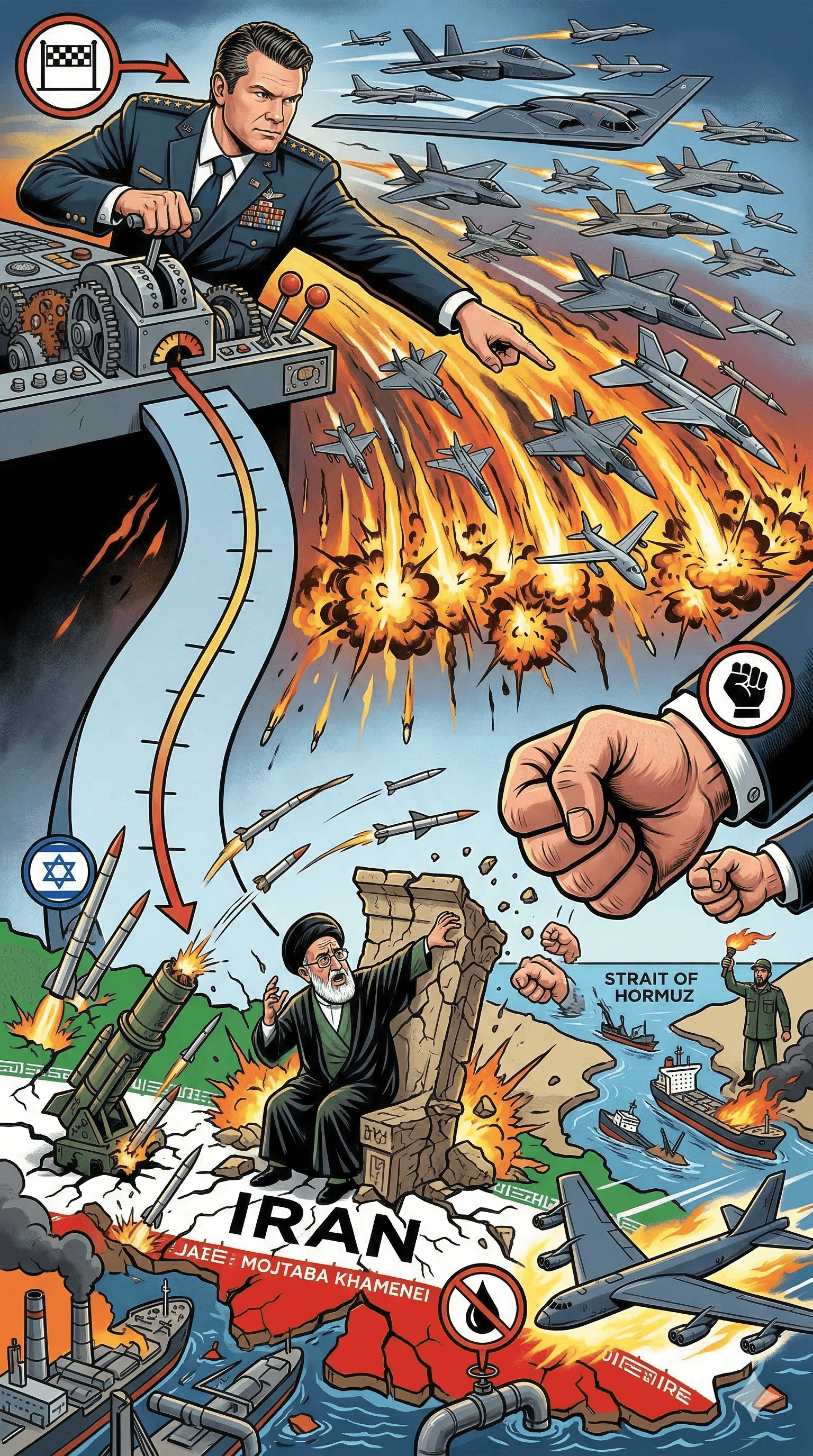
WASHINGTON, D.C. — In a significant escalation of the ongoing conflict in the Middle East, U.S. Defense Secretary Pete Hegseth announced that Tuesday marks the “most intense day of strikes” inside Iran since the U.S.-Israeli military campaign began. Addressing reporters at the Pentagon on day 11 of Operation Epic Fury, Hegseth issued a stern warning to Tehran and asserted that the United States will conclude the war strictly on its own terms.
“Today will be yet again our most intense day of strikes inside Iran—the most fighters, the most bombers, the most strikes, intelligence more refined and better than ever,” Hegseth declared.
The defense secretary emphasized that Iran is “badly losing” and increasingly isolated, noting that the volume of Iranian missile fire over the past 24 hours has reached its lowest point since the operation began on February 28, 2026.
Operation Epic Fury: Strategic Objectives and Unprecedented Escalation
The military campaign, which triggered a massive geopolitical shockwave following the death of Iranian Supreme Leader Ayatollah Ali Khamenei in its opening hours, is executing a highly coordinated strategy aimed at systematically dismantling Iran’s military infrastructure.
According to Hegseth, the U.S. military remains laser-focused on three primary objectives:
Eradicating Iran’s ballistic missile stockpiles, launch capabilities, and defense industrial base.
Destroying the Iranian Navy.
Permanently denying Tehran the ability to produce nuclear weapons—a mission that builds on the U.S. strikes against Iranian nuclear facilities during Operation Midnight Hammer in June 2025.
Gen. Dan Caine, Chairman of the Joint Chiefs of Staff, appeared alongside Hegseth to provide a situational update. Gen. Caine confirmed that U.S. and allied forces have already struck over 5,000 Iranian targets. Furthermore, the coalition has decimated more than 50 Iranian naval vessels and is actively hunting mine-laying ships and storage facilities to prevent Iran from mining strategic waterways.
Tensions Over the War's Timeline
Despite the ferocious pace of the air campaign, questions remain regarding the conflict's duration. Hegseth explicitly declined to provide a definitive end date, stating simply that the war will conclude “on our timeline.”
“It’s not for me to posit whether it’s the beginning, the middle, or the end,” Hegseth told reporters, emphasizing that President Donald Trump ultimately “gets to control the throttle.”
President Trump has recently sent mixed signals regarding the timeline of the conflict, stating earlier this week that the war is “very complete, pretty much,” though acknowledging that Washington has “not won enough.” Meanwhile, Israeli Prime Minister Benjamin Netanyahu has publicly pivoted toward a broader ideological goal, declaring that the objective is the popular overthrow of the Iranian government, stating, “We are breaking their bones.”
Hegseth also firmly warned external actors against interfering. Following a phone call between President Trump and Russian President Vladimir Putin, Hegseth cautioned Moscow to stay out of the Iran conflict.
Regional Threats and Global Economic Fallout
As the U.S. presses its advantage in the skies, the geopolitical and economic fallout is rapidly spilling over Iran's borders. Hegseth strongly condemned Iran for allegedly moving rocket launchers into civilian neighborhoods, near schools, and hospitals to complicate U.S. targeting.
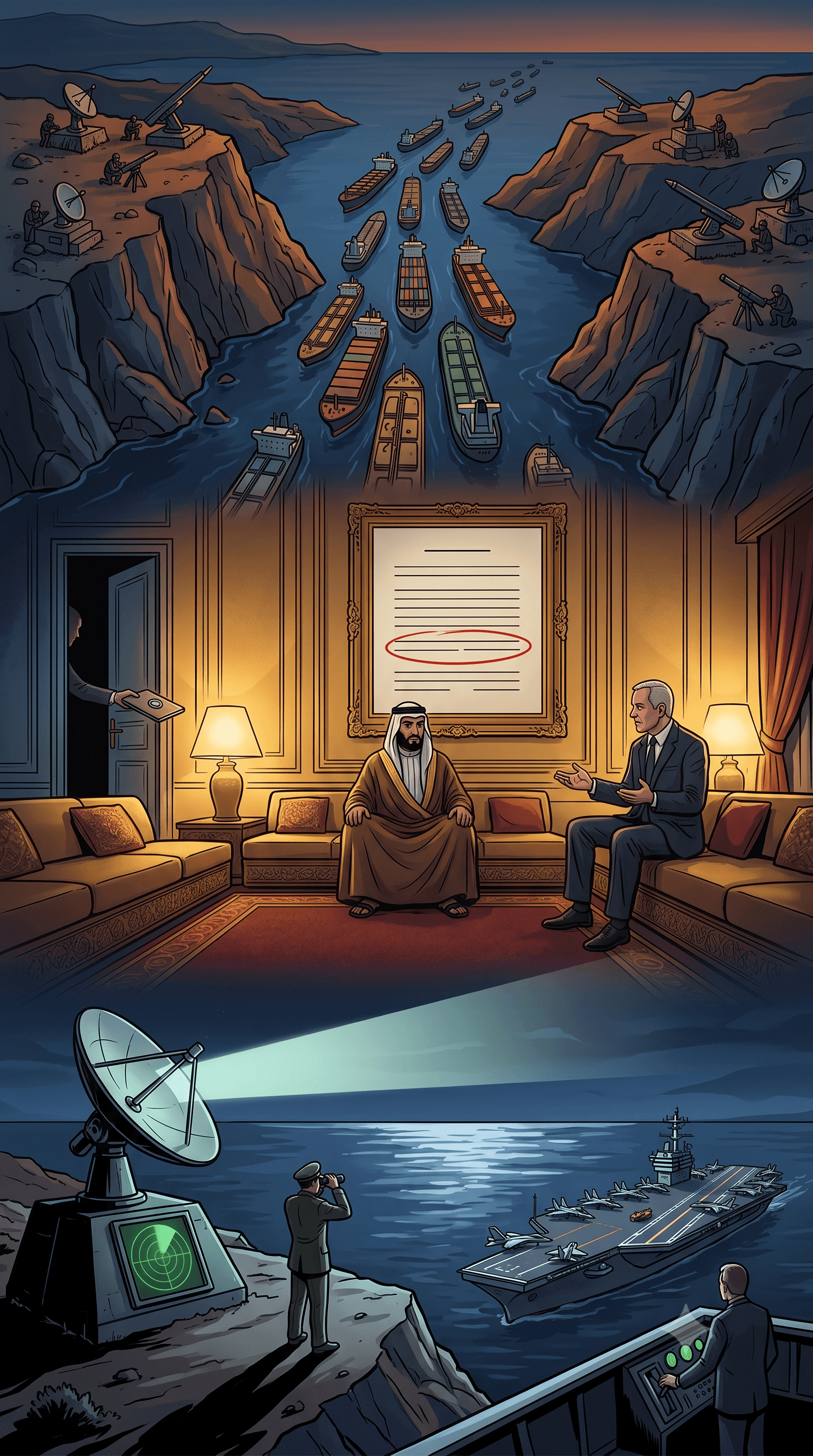
Crucially, the conflict threatens to choke off global energy supplies. The Islamic Revolutionary Guard Corps (IRGC) has vowed that “not a single liter of oil” will leave the Persian Gulf. In response, Hegseth delivered a blunt ultimatum regarding the Strait of Hormuz—the world’s most critical oil transit chokepoint.
If Tehran attempts to halt the flow of oil through the Strait, Hegseth warned, they will be hit "harder than ever," echoing President Trump's threat to retaliate "twenty times harder."
The economic ripples are already creating a global energy crisis. Fuel and financial markets have experienced wild swings, with nations like Egypt hiking fuel prices by up to 17%. In Southeast Asia, countries including Thailand and Vietnam are urging citizens to work from home to conserve dwindling fuel supplies.
Meanwhile, the Gulf region remains on high alert. Intercepts of incoming Iranian fire have been reported over Qatar and the United Arab Emirates, and the U.K. military has warned of potential maritime attacks off the coast of Abu Dhabi.
Outlook and Impact
The sheer scale of Tuesday's aerial bombardment indicates that the U.S. administration is pushing for a rapid degradation of Iran's remaining conventional forces to force a total capitulation. However, with Iranian Parliament Speaker Mohammad Bagher Qalibaf entirely dismissing the notion of a ceasefire, the region remains locked in a devastating war of attrition.
The coming days will be critical in determining whether the U.S. strategy of "overwhelming and unrelenting" force can achieve its ambitious objectives without triggering a wider, uncontrollable regional war or a catastrophic collapse of the global energy market.
#news #geopolitics #USPolitics #IranWar #MiddleEastConflict #OperationEpicFury #PeteHegseth #GlobalEconomy #EnergyCrisis #MilitaryStrategy #DonaldTrump