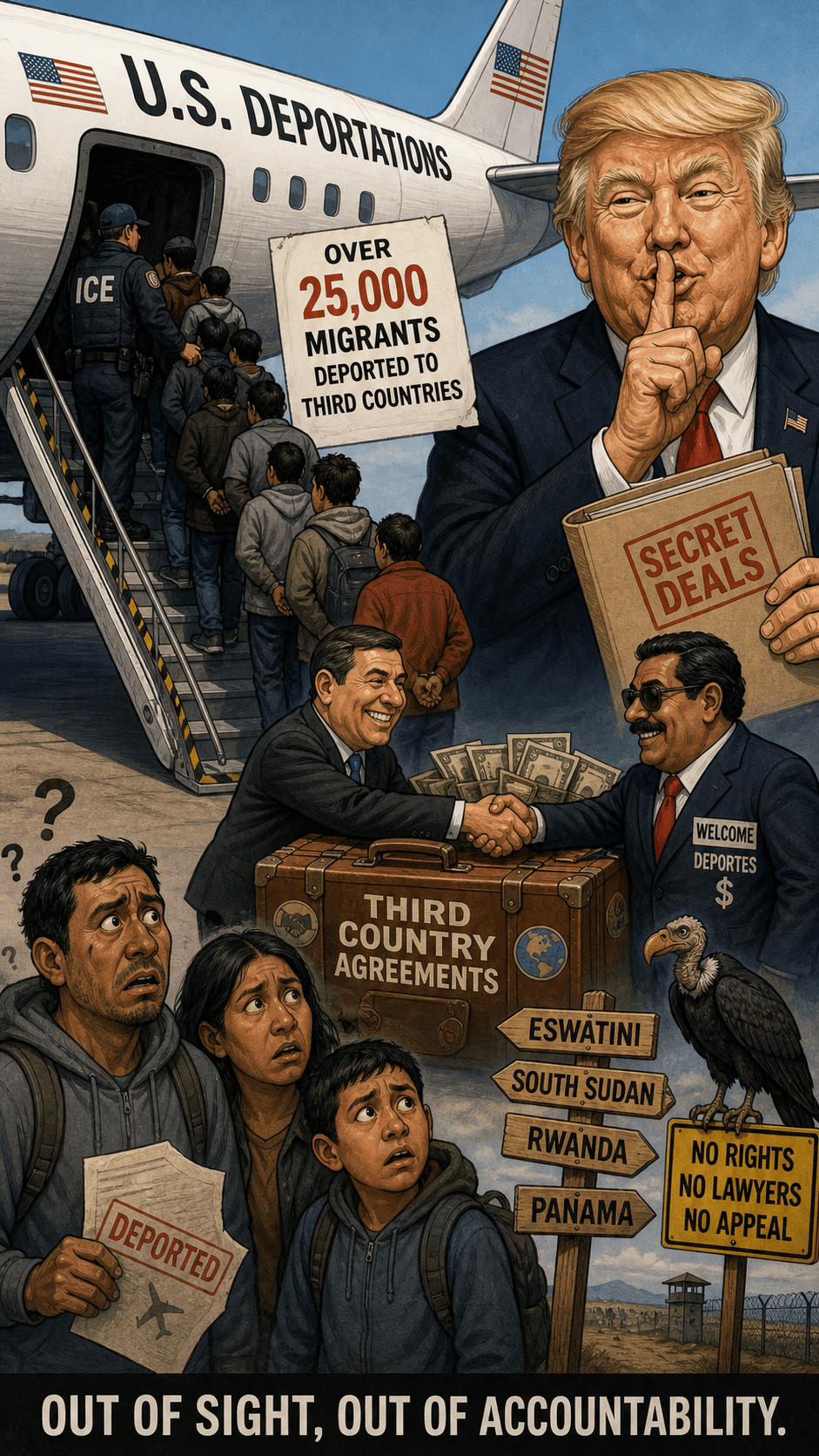
A sprawling new investigation by the Paris-based journalism nonprofit Forbidden Stories, working in collaboration with dozens of international media organizations, has unveiled a massive and highly secretive United States deportation program. According to the investigation, the US has deported more than 25,000 migrants to third countries—nations where the deportees have no citizenship, legal status, or prior ties.
The initiative, implemented since the start of the Trump administration in January 2025, represents a significant shift in US immigration enforcement. Bypassing standard deportation protocols, the program relies on confidential diplomatic agreements secured with millions of dollars in financial incentives. The revelations have sparked intense legal and humanitarian scrutiny regarding due process and the treatment of vulnerable populations.
The Scope of Third-Country Deportations
The joint media investigation, dubbed "The Deportation Project," involved 72 journalists from 24 organizations across 15 countries. By compiling publicly available government data, court records, and leaked documents, the consortium painted a comprehensive picture of a policy operating largely behind closed doors.
Between January 2025 and August 31, 2026, the US expelled at least 25,447 individuals to 28 different countries. The vast majority of these migrants—approximately 20,000—were sent to Mexico. However, the remaining deportees were dispersed across the globe to nations in Latin America, Africa, and the Pacific.
The agreements, which vary significantly from country to country, dictate which nationalities can be accepted and whether individuals with criminal records are eligible for transfer. While 28 nations have already received deportees, the investigation found that agreements have been finalized with seven more, and the US has actively approached at least 50 countries globally—including 49 of Africa's 54 nations—to participate in the program.
Financial Incentives and Diplomatic Pressure
To facilitate these controversial removals, the US government has allocated substantial financial resources. The investigation uncovered that $410 million was earmarked to secure cooperation from recipient states and international organizations. Internal State Department records showed that $81 million was specifically set aside as direct payments to signatory governments.
Additionally, funds have been directed to UN agencies to manage the influx of deportees. For example, the State Department provided $30 million to the UN Refugee Agency (UNHCR) in Cameroon to assist with the program.
Beyond financial incentives, the US has reportedly used coercive diplomatic tactics. Earlier investigations suggested that Washington utilized visa bans and other travel restrictions to pressure African nations into accepting third-country deportees. In exchange for compliance, foreign governments have allegedly received visa restriction lifts and favorable diplomatic treatment.
Humanitarian Concerns and the Legal Battle
Human rights advocates and immigration lawyers have condemned the third-country deportation policy, characterizing it as a "show of force" designed to deter unauthorized immigration by weaponizing uncertainty and fear. Critics argue that deporting individuals to unfamiliar nations where they lack language skills, support networks, or legal standing places them in profound danger.
Once deported, many individuals have reportedly been forcibly detained in airports, prisons, hotels, and military camps in their new host countries. Although some recipient nations have asylum laws on the books, human rights groups warn that deportees are rarely afforded meaningful opportunities to claim protection, raising serious concerns about violations of the principle of non-refoulement—the international law forbidding the return of asylum seekers to places where they face persecution or torture.
The policy is currently facing severe legal challenges. In a major setback for the administration, a US federal appeals court rejected a core component of the policy on September 18, 2026. The court ruled in a class-action lawsuit that the rapid deportation of migrants to third countries without adequate notice or an opportunity to raise safety concerns violates due process. The judges affirmed that constitutional guarantees cannot be circumvented by simply putting migrants on planes to nations with which they have no connection. The administration is expected to appeal the decision.
Impact and Outlook
The findings of The Deportation Project expose a radical transformation in how the United States handles unauthorized immigration. By outsourcing deportation to third countries through secretive, financially backed agreements, the administration has created a complex global web of migrant transfers that operates outside traditional legal frameworks.
As the legal battles continue to unfold in federal courts, the fate of the third-country deportation program remains uncertain. However, the human impact is already clear. Thousands of individuals find themselves stranded in unfamiliar nations, highlighting the ongoing tension between aggressive border enforcement policies and international human rights obligations.