The United States economy, which had demonstrated remarkable resilience over the past year, is suddenly navigating a turbulent new landscape. Following a series of open-ended military strikes by U.S. and Israeli forces against Iranian targets in early March 2026, global financial markets have been thrown into chaos. The escalation has sent energy prices surging, triggered massive sell-offs on Wall Street, and forced investors to sharply recalibrate their expectations for inflation and the Federal Reserve’s monetary policy.
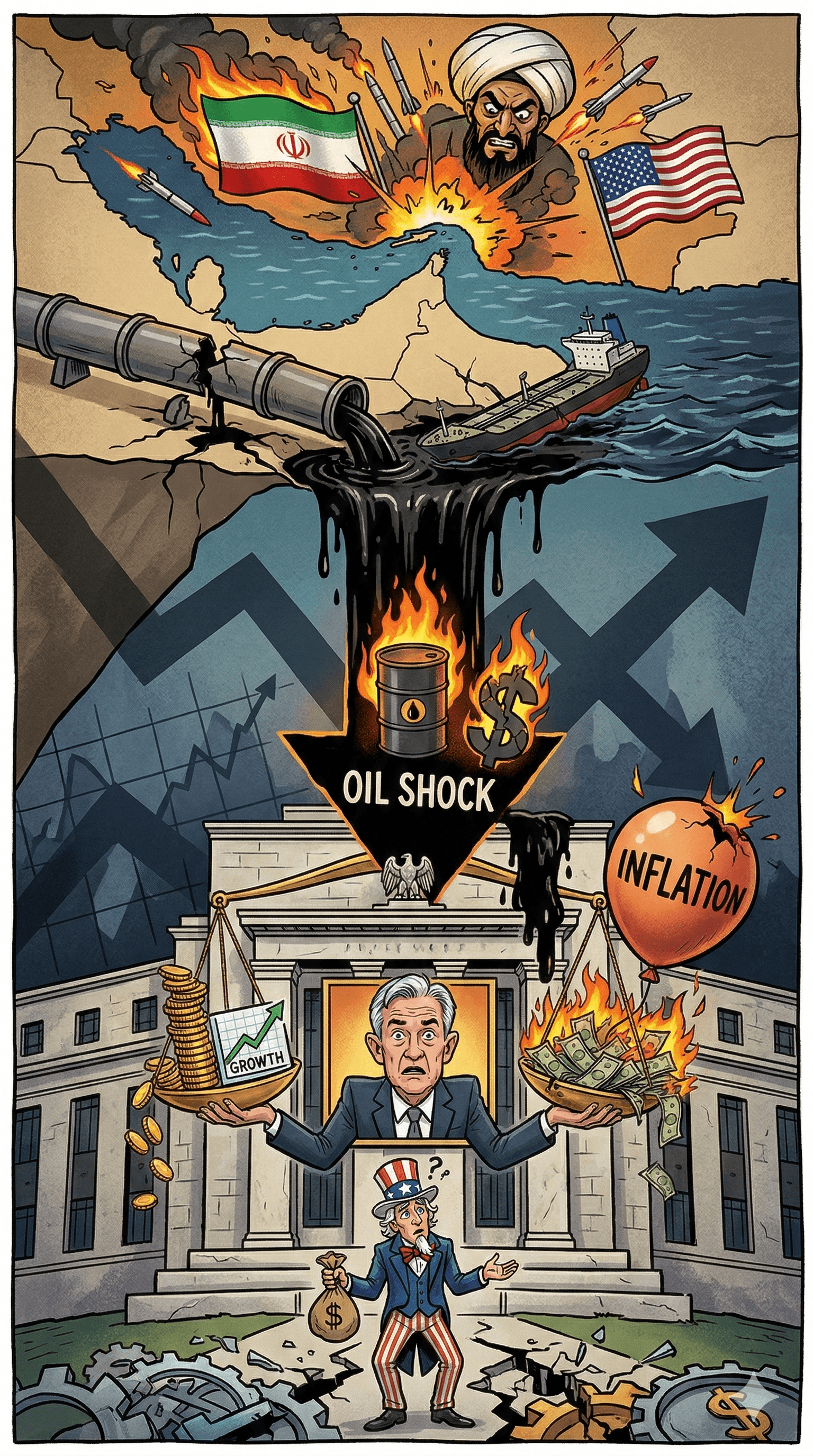
The Immediate Threat: A Global Oil Shock
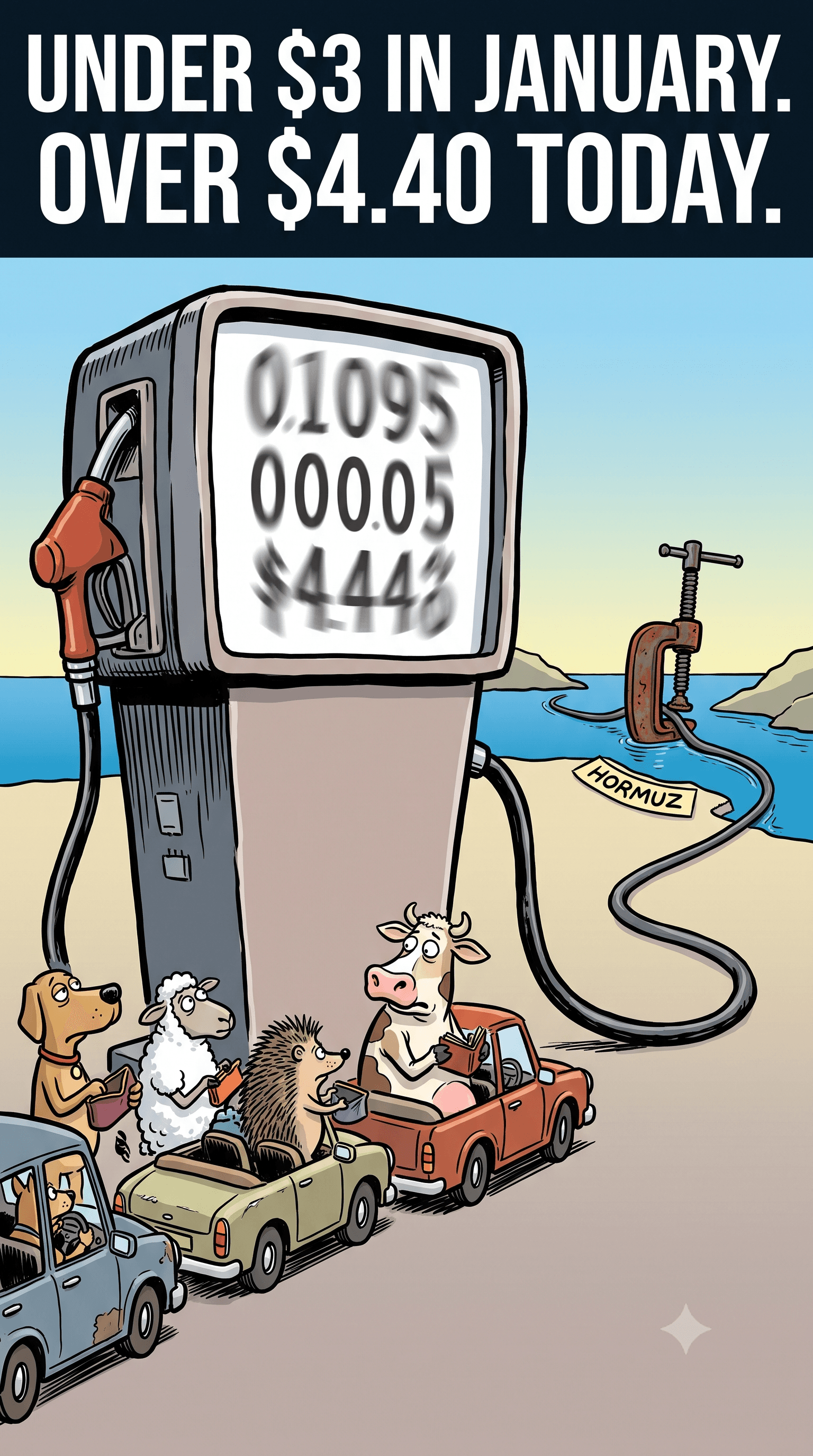
The most immediate and visible consequence of the geopolitical escalation has been felt in global energy markets. Almost immediately after the conflict intensified, oil prices experienced a rapid spike. Brent crude, the international benchmark, leaped past $84 per barrel—a roughly 15% increase from the prior week—while West Texas Intermediate (WTI) breached the $76 mark.
The central focal point of market anxiety is the Strait of Hormuz. Roughly one-fifth of the world’s global oil supply and a significant portion of its liquefied natural gas (LNG) pass through this narrow, strategically vital maritime bottleneck. Threats of Iranian retaliation, including the potential harassment of commercial vessels or the laying of naval mines, have already sent LNG tanker rates soaring to over $200,000 a day.
Energy analysts warn that while the U.S. is somewhat buffered by its robust domestic shale production—which has transformed the country into a net oil exporter—the global nature of commodities means Americans will not escape unscathed. Should Gulf energy infrastructure suffer structural damage or the Strait of Hormuz face a prolonged closure, experts at S&P Global Energy and major financial institutions warn that crude prices could easily surpass $100 per barrel, amounting to a genuine supply shock.
Wall Street’s Reaction: Volatility and the Tech Sell-Off
The specter of a prolonged war and an accompanying energy crisis has sent shudders through global equities. On March 3, 2026, the Dow Jones Industrial Average plummeted over 1,200 points in early trading before clawing back some losses to close approximately 400 points lower. The S&P 500 and the tech-heavy Nasdaq Composite also faced steep declines as the VIX volatility index—Wall Street's "fear gauge"—spiked sharply.
Growth-oriented technology and semiconductor stocks were among the hardest hit. Shares of industry giants like Nvidia and Intel faced intense downward pressure as investors aggressively pulled back from risk assets. When markets fear sudden inflation and the prospect of higher-for-longer interest rates, growth stocks whose valuations depend on future earnings are historically the first to fall.
The aviation and travel sectors were also acutely affected by the sudden spike in crude. Airlines and cruise operators led early market declines as investors factored in the devastating impact of higher jet fuel bills and disrupted international travel routes. Major carriers like American Airlines and United Airlines saw their stock values sink as the fighting in the Middle East forced the closure of regional airspace.
The panic was not confined to the United States. In Asia, Japan’s Nikkei 225 dropped 3.1%, and South Korea’s Kospi plunged over 7%. European markets similarly sank, with the UK's FTSE 100 suffering its worst trading day in nearly a year as European natural gas prices concurrently spiked by 30%. Meanwhile, the U.S. dollar surged, reasserting its dominance as the ultimate safe-haven currency during periods of extreme geopolitical duress.
Federal Reserve Outlook: A Fresh Policy Dilemma
For the Federal Reserve, the sudden eruption of conflict introduces a complex policy dilemma. Prior to the strikes, the central bank was operating under a relatively constructive economic backdrop, with inflation slowly cooling and markets anticipating a steady cadence of interest rate cuts throughout 2026.
That calculus is now under severe threat. While central bankers typically try to "look through" volatile, short-term energy shocks, a sustained jump in fuel prices risks bleeding into the broader economy, raising the costs of goods, services, and logistics.
New York Fed President John Williams has publicly adopted a cautious, wait-and-see approach. Speaking shortly after the market rout began, Williams emphasized that while it is too early to fully assess the macroeconomic damage, the U.S. economy is less reliant on imported oil than it was during the energy crises of the 1970s. "Past experiences show that movements in oil prices of the kind that we've seen so far don't fundamentally shift the economy, but we'll wait and see," Williams stated.
Despite this measured tone from officials, traders are aggressively repricing their expectations. Swaps markets now anticipate fewer rate cuts from the Fed this year. Current CME Group data indicates a strong likelihood that the central bank will hold its key benchmark rate steady in the 3.50% to 3.75% target range in the near term to prevent a resurgence of domestic inflation.
Geopolitical Context and Global Implications
The U.S. military campaign, initiated under President Donald Trump with the stated objective of targeting Iran's government and military infrastructure, layers extreme geopolitical risk on top of an already fragile global environment. The International Monetary Fund (IMF) has warned that disruptions to trade, surging energy prices, and financial market volatility could severely impact global stability.
The spillover effects are not limited to American shores. Economists warn that Europe is particularly vulnerable. Raphael Olszyna-Marzys, an international economist at J. Safra Sarasin, noted that in a worst-case scenario, oil prices sustaining above $100 per barrel could push European inflation up by more than 2 percentage points, potentially tipping several fragile EU economies into recession. Similarly, the Bank of England is now viewed as far less likely to lower interest rates at its upcoming meetings, complicating efforts to ease the cost-of-living crisis in the UK.
Analysts note that the U.S. economy was already managing the weight of recent tariff implementations, a bloated fiscal deficit, and persistent core inflation. A long war risks creating a scenario of "stagflation"—a toxic economic mix of stagnant growth and high inflation that central banks are notoriously ill-equipped to combat.
Economic Outlook and Future Impact
The resilience of the U.S. and global economies will be severely tested in the coming weeks. If the military conflict is short-lived and regional containment is achieved, financial markets may quickly stabilize, allowing the Federal Reserve to resume its planned monetary easing. However, a protracted, asymmetric war in the Middle East that disrupts critical shipping lanes will fundamentally alter the inflation trajectory. Until clarity emerges from the region, immense uncertainty will remain the defining feature of the global economic outlook.
#News #Geopolitics #USEconomy #IranWar #OilShock #FederalReserve #StockMarket #Inflation #EnergyCrisis #MiddleEastConflict #GlobalTrade