In a sudden diplomatic pivot that has temporarily eased fears of a broader regional catastrophe, U.S. President Donald Trump announced on Monday a five-day suspension of planned military strikes against Iranian power plants. The pause comes amid high-stakes claims of "productive" peace talks between Washington and Tehran, offering a potential off-ramp in the escalating US-Iran war that has heavily disrupted global energy markets since late February 2026.
The 48-Hour Ultimatum and the Threat to the Strait of Hormuz
Over the weekend, tensions reached a fever pitch when President Trump issued a stark 48-hour ultimatum to Iran. He warned that the United States would "hit and obliterate" Iranian energy infrastructure, beginning with its largest power plants, unless Tehran fully reopened the Strait of Hormuz to international shipping by Monday night.
The Strait of Hormuz, a critical maritime choke point through which roughly a fifth of the world's traded oil passes, has been effectively blocked to Western allies by Iran since the US-Israeli military campaign intensified.
Escaping the Brink of Infrastructure Destruction
In response to Trump's ultimatum, Iranian officials issued severe counter-threats. Parliament Speaker Mohammad Bagher Ghalibaf and the Islamic Revolutionary Guard Corps (IRGC) warned that any U.S. strike on Iranian power plants would trigger the "irreversible" destruction of vital energy and water desalination facilities across the Middle East. Tehran also threatened to mine the entire Persian Gulf, a move that would cripple the global economy and devastate neighboring Gulf states.
The Diplomatic Shift: Are Washington and Tehran Actually Talking?
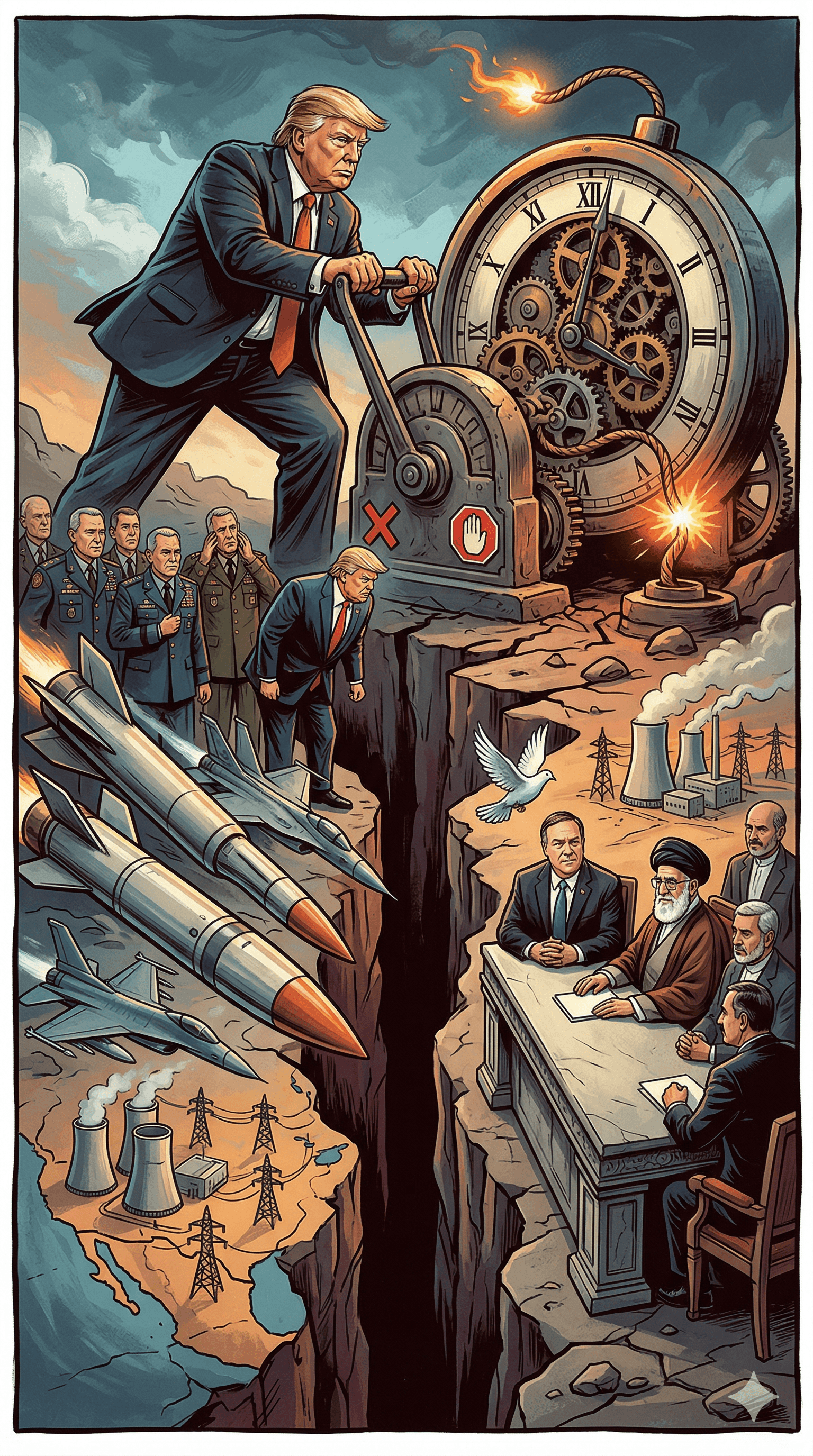
Hours before the Monday night deadline was set to expire, Trump took to his Truth Social platform to announce the five-day reprieve. The U.S. President stated he had instructed the Department of Defense to postpone all military strikes on Iranian power plants, citing "in-depth, detailed, and constructive" discussions over the past two days.
"Based on the tenor and tone of these... constructive conversations, which will continue throughout the week, I have instructed the Department of War to postpone any and all military strikes against Iranian power plants and energy infrastructure," Trump stated, adding that the pause is "subject to the success" of ongoing negotiations.
Trump later told reporters that the U.S. had reached "major points of agreement" with an unnamed top Iranian leader who wants to "make a deal badly." He noted that his senior envoys, Steve Witkoff and Jared Kushner, were directly involved in the dialogue over the weekend.
Conflicting Narratives and Backchannel Diplomacy
Despite Trump's optimism, Iranian state media and officials painted a vastly different picture. Shortly after the announcement, Iranian state television broadcasted graphics declaring that the U.S. President had backed down "following Iran's firm warning."
Iran's Foreign Ministry strongly denied that any direct talks had taken place, characterizing the five-day extension as an attempt by the Trump administration to buy time, finalize military plans, and lower surging global energy prices. However, diplomatic backchannels appear to be highly active. Reports indicate that Turkish Foreign Minister Hakan Fidan, who has previously acted as an intermediary, held phone calls with Iranian Foreign Minister Abbas Araghchi and U.S. officials. Egypt has also confirmed its involvement in delivering clear messages aimed at de-escalation.According to retired U.S. Army Lieutenant General H.R. McMaster, the conflicting messaging from Tehran may be due to a "fragmented" regime struggling to maintain internal communication following weeks of heavy military strikes.
International Relief and Global Economic Impact
The international community breathed a collective sigh of relief following the delay. German Chancellor Friedrich Merz stated he had spoken directly with Trump on Sunday to express his concerns over the planned attacks, adding Monday that he was "grateful" the strikes were postponed.The US-Iran war has heavily impacted the global economy, creating what International Energy Agency (IEA) chief Fatih Birol described as a "major, major threat" that surpasses the combined economic damage of the 1970s oil shocks and the Russia-Ukraine war.
Oil Prices Tumble as Markets React
The news that Trump halted power plant strikes provided immediate relief to volatile financial markets. Wall Street stocks surged early Monday, with the S&P 500 rising 1.4% and the Nasdaq climbing 1.6% shortly after the opening bell. Simultaneously, oil prices plummeted, with Brent crude dropping nearly 9.8% as traders reacted to the potential de-escalation in the Middle East conflict and the survival of Gulf energy infrastructure.
The Deepening Humanitarian Crisis
While the financial markets celebrated the diplomatic pause, the human cost of the month-long conflict continues to mount. The US-Israeli strikes and Iranian retaliations have resulted in widespread destruction. Iranian authorities report a severe toll on civilians, with thousands killed and the country enduring an unprecedented 550-hour internet blackout that has severed communications for millions.
Meanwhile, cross-border strikes have rocked Israel, with Hezbollah rocket fire and Iranian missiles targeting both military and civilian infrastructure. Legal scholars and human rights groups have repeatedly warned that targeting power plants and water desalination facilities—whether by the U.S. or Iran—would constitute a war crime, disproportionately harming civilian populations and hospitals across the desert nations of the Gulf.
Outlook: What Happens After the 5-Day Reprieve?
As the five-day window opens, the international community is watching closely to see if this diplomatic opening can translate into a lasting ceasefire. The structural realities of the US-Iran war remain unresolved. Iran still restricts access through the Strait of Hormuz, and the U.S. military presence in the region continues to grow.
If backchannel negotiations through Turkey or Egypt succeed in formalizing the agreements Trump referenced, the region may avoid a catastrophic infrastructure war. However, if the talks collapse by the end of the week, the resumption of Trump's ultimatum threatens to plunge the Middle East into an unprecedented phase of total war, with devastating consequences for global energy and millions of civilian lives.