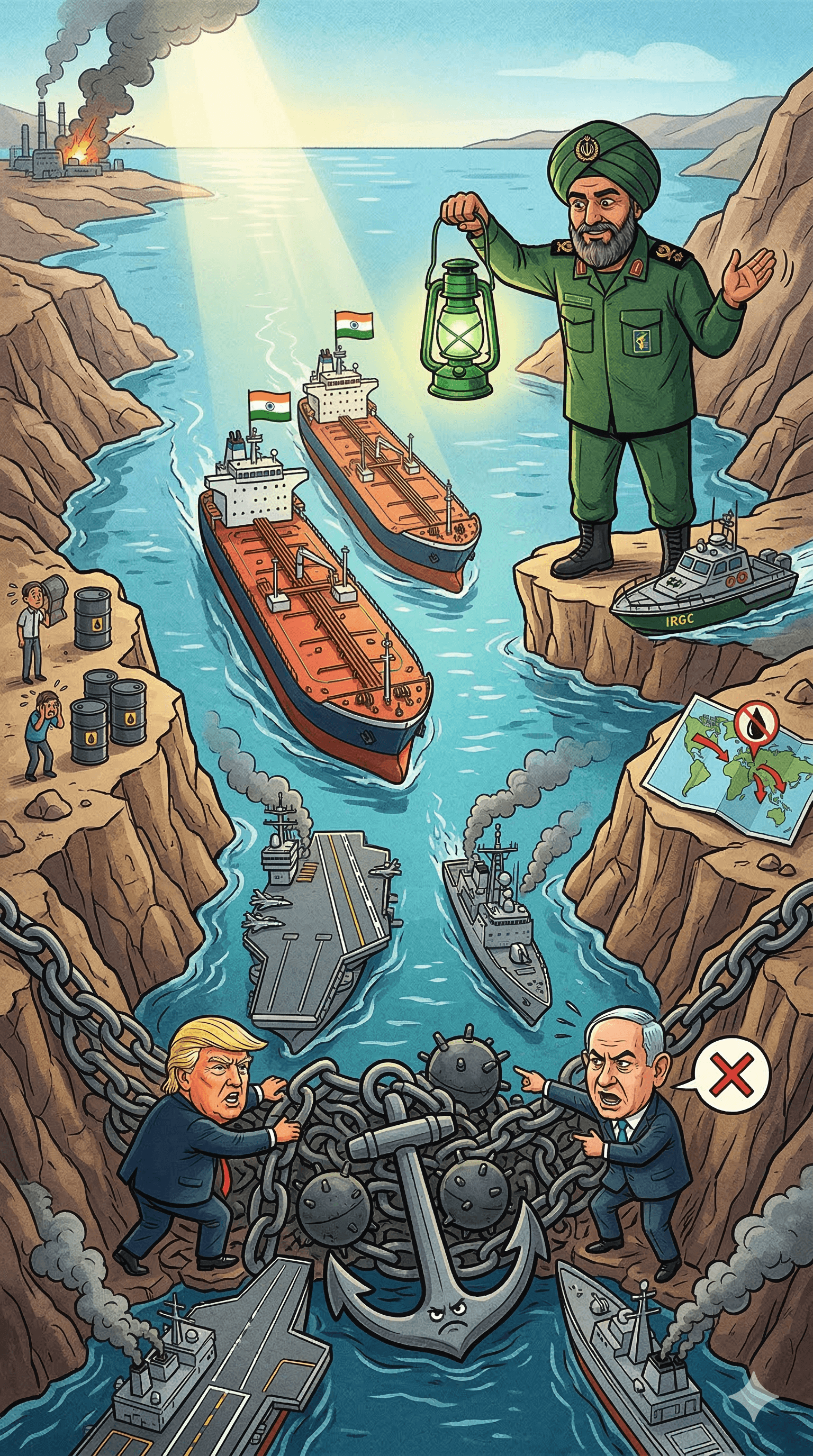
Amid the escalating US-Israel-Iran war that has severely disrupted global maritime trade, Tehran has granted safe passage to two Indian-flagged oil tankers through the highly contested Strait of Hormuz. The vessels, identified as the Pushpak and the Parimal, are reportedly navigating the critical waterway safely, even as ships linked to the United States, Europe, and Israel face strict blockades and military targeting by Iranian forces. This development marks a significant diplomatic victory for New Delhi as it scrambles to secure its energy supply chains amidst a deepening crisis in the Middle East.
Diplomatic Breakthrough: India Secures Strait of Hormuz Exemption
The clearance for the Indian tankers follows high-level diplomatic interventions. India's External Affairs Minister S. Jaishankar held a pivotal telephone conversation with his Iranian counterpart, Abbas Araghchi, late Tuesday. According to sources familiar with the developments, ensuring the safe navigation of commercial vessels through the Strait of Hormuz topped the agenda. This marked the third direct conversation between the two foreign ministers since the outbreak of the regional war on February 28, 2026.
New Delhi’s diplomatic maneuvering highlights its strategic autonomy and non-aligned approach to the Middle East conflict. While the Islamic Revolutionary Guard Corps (IRGC) has virtually closed the strait to Western shipping—claiming the right to regulate passage under wartime international law—India's continuous engagement with Tehran has successfully carved out an exemption. The Indian government has emphasized the necessity of keeping the sea route open for the uninterrupted transportation of crude oil and liquefied natural gas (LNG), which are vital to the country's economic stability.
Background of the US-Israel-Iran War
The current crisis was ignited in late February when US and Israeli forces launched coordinated military strikes across Iran. The military campaign, which Washington and Tel Aviv described as pre-emptive strikes targeting Iran's nuclear and ballistic missile capabilities, resulted in the reported death of Iran's Supreme Leader Ali Khamenei.
In retaliation, Iran has launched drone and missile strikes against Israeli positions and declared the Strait of Hormuz a closed maritime zone for hostile nations. The IRGC has actively targeted commercial vessels suspected of having Western or Israeli affiliations. US President Donald Trump and Israeli Prime Minister Benjamin Netanyahu have vowed to continue the military campaign, with US forces recently sinking 16 Iranian vessels allegedly attempting to lay naval mines in the strait. Consequently, the waterway—a crucial chokepoint that handles approximately 20% of the world's daily oil consumption—has become a highly volatile war zone.
First Successful Crude Delivery Reaches Mumbai
While the Pushpak and Parimal are currently transiting the strait, India has already recorded its first successful crude delivery since the hostilities commenced. On Wednesday, March 11, the Liberian-flagged tanker Shenlong Suezmax, captained by an Indian mariner, successfully berthed at the port of Mumbai.
Loaded with over 135,000 metric tonnes of Saudi Arabian crude oil from the Ras Tanura port, the vessel utilized evasive maneuvers to navigate the perilous waters. Maritime tracking data revealed that the ship temporarily disabled its Automatic Identification System (AIS) transponders—a tactic known as "going dark"—to avoid detection by Iranian patrol boats. The successful discharge of its cargo at Jawahar Dweep provides crucial relief to Indian refineries and highlights the extreme lengths to which shipping companies must go to maintain global energy flows during the US-Israel-Iran war.
Global Energy Crisis and Domestic Economic Impact
The disruption in the Strait of Hormuz has sent shockwaves through the global economy. Brent crude oil prices have surged past $100 a barrel, exacerbating fears of widespread inflation. For India, which imports more than 80% of its crude oil requirements—the majority of which transits through the Middle East—the blockade poses an immediate threat to energy security.
The domestic impact is already visible. Disruptions in the supply chain have triggered a shortage of commercial LPG cylinders in major Indian cities, severely affecting the hospitality sector. In response, Prime Minister Narendra Modi has directed government officials to closely monitor the situation, counter misinformation regarding fuel shortages, and explore all possible contingency measures to stabilize domestic supplies.
Ongoing Risks and Maritime Security Concerns
Despite the safe passage granted to the two Indian tankers, the broader maritime environment remains highly dangerous. More than two dozen Indian-flagged vessels remain trapped in or near the Strait of Hormuz, unable to freely transit the area due to skyrocketing insurance premiums and the persistent threat of military strikes.
The danger was underscored earlier this week when a Thai-flagged cargo vessel, the Mayuree Naree, was attacked by a projectile near the Strait of Hormuz while en route to Gujarat, India. The Indian Ministry of External Affairs (MEA) strongly deplored the targeting of commercial shipping, noting that innocent lives, including those of Indian citizens, have already been lost in the escalating conflict.
In response to the mounting risks, India’s Directorate General of Shipping has mandated enhanced safety protocols for all Indian-flagged vessels in the region. The government is also reportedly weighing high-level options, including the possibility of deploying the Indian Navy to escort stranded merchant ships out of the crisis-hit waters.
Impact and Outlook
The safe passage of the Pushpak and Parimal underscores the effectiveness of India’s pragmatic diplomacy amid the chaotic US-Israel-Iran war. By maintaining open channels with Tehran while simultaneously coordinating with Western and regional partners, New Delhi has managed to protect its immediate energy interests. However, the global outlook remains deeply concerning. As long as the Strait of Hormuz remains contested and the broader geopolitical conflict shows no signs of de-escalation, global oil markets will remain highly volatile. The international community faces a prolonged period of economic uncertainty, with the safety of global maritime trade hanging in the balance.
#StraitOfHormuz #USIsraelIranWar #Geopolitics #GlobalEconomy #IndiaForeignPolicy #OilPrices #MaritimeSecurity #MiddleEastCrisis #EnergySecurity #IranWar