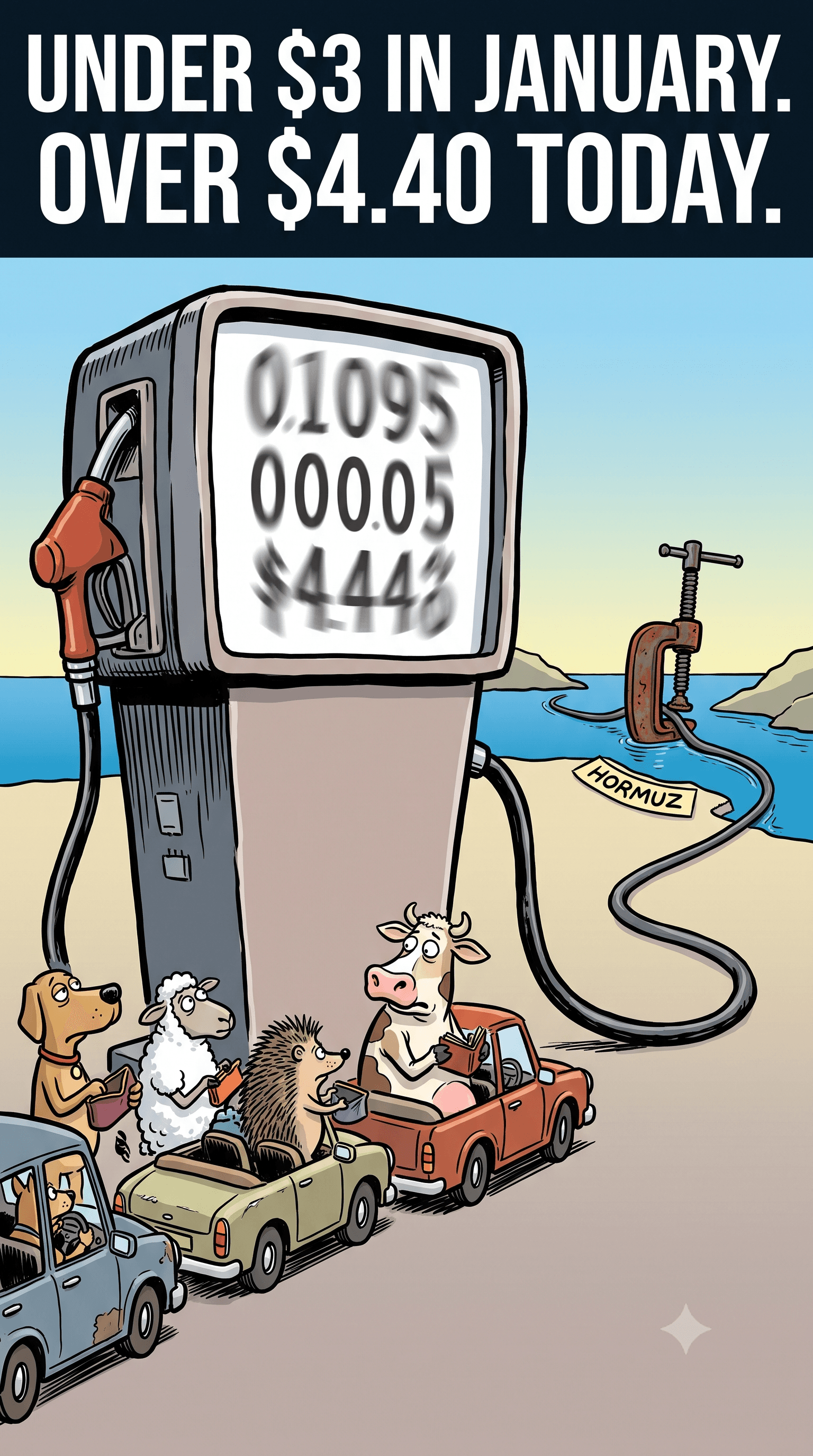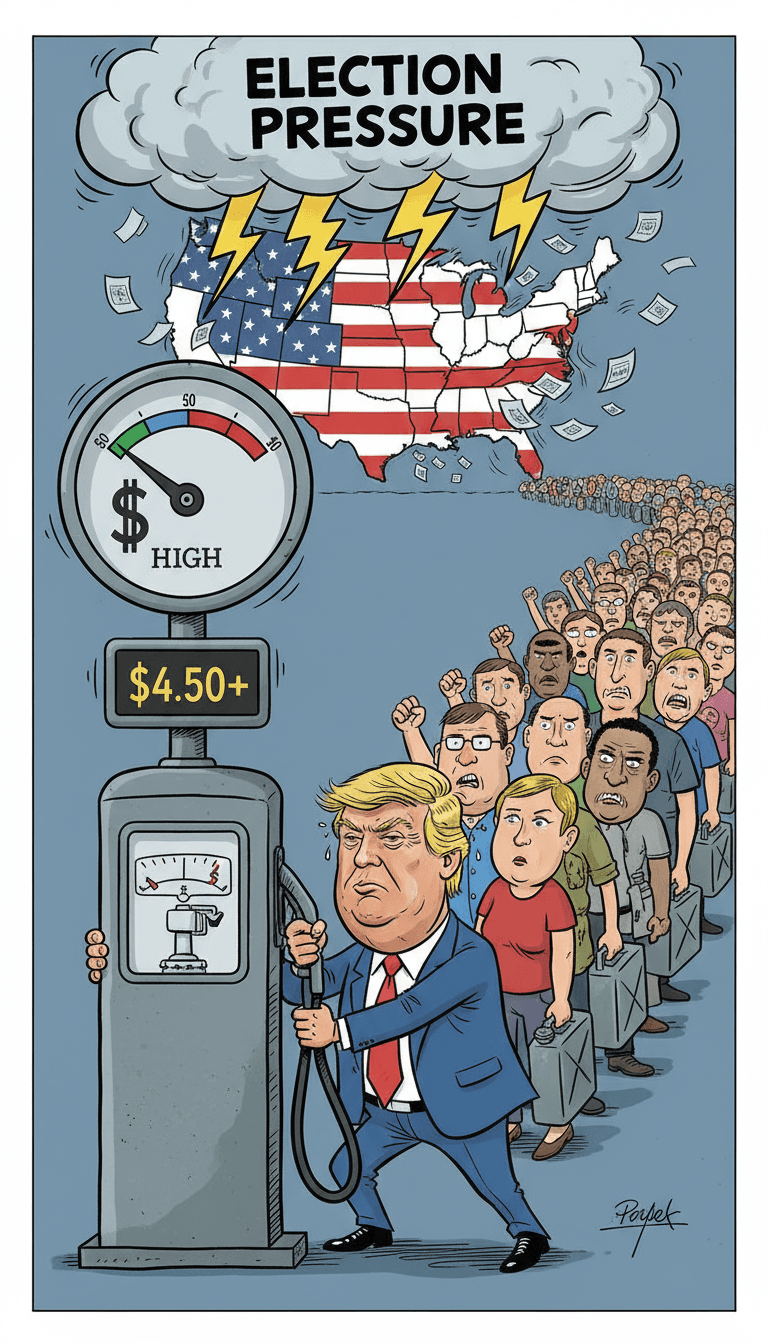
The cost of refueling a vehicle in the United States has reached a notable milestone, with the national average price for regular unleaded petrol surpassing $4.50 per gallon for the first time since 2022. This sharp increase in fuel costs, a critical component of consumer spending and a powerful economic indicator, is now injecting significant volatility and pressure into the 2024 presidential campaign, affecting both the incumbent administration of President Joe Biden and the challenging campaign of President Donald Trump.
Fueling the Political Landscape
The spike in petrol prices is a significant economic and political event. In the United States, gasoline costs are often seen as a barometer of the national economic health by the public. High prices are quickly felt by consumers and can dramatically shape public perception of economic performance. This development is particularly potent in an election year, where economic anxiety and inflation remain top-of-mind for voters.
For President Joe Biden, rising fuel costs pose a significant political challenge. His administration has consistently touted job growth and efforts to combat inflation, but high petrol prices threaten to overshadow these messages. Republicans have seized on the issue, blaming the Biden administration's energy policies for the increase. The White House has responded by emphasizing that global factors, such as geopolitical instability in oil-producing regions and production cuts by major producers, are the primary drivers of the price hike. They have also pointed to their efforts to increase domestic production, which has reached record levels.
Conversely, for President Donald Trump, the rising prices are a potential political liability. While he is not the sitting president, his campaign has made promises of achieving "energy dominance" and lowering prices, which are now being tested by market realities. Trump has consistently criticized the Biden administration's energy policies, claiming that his policies would lead to significantly lower prices. However, market analysts point out that petrol prices are largely determined by global crude oil prices, which are influenced by supply and demand factors beyond the control of any single president. The increase in prices can also be seen as a challenge to Trump's message that only he can fix the economy and lower costs.
Unraveling the Economic and Geopolitical Drivers
The current rise in US petrol prices is not an isolated event but rather the result of a convergence of complex factors, both economic and geopolitical. Understanding these drivers is essential to comprehending why prices have climbed to their highest levels in nearly two years.
The Role of Crude Oil Prices: The single most significant factor in determining the price of petrol is the cost of crude oil. Crude oil prices are highly susceptible to changes in global supply and demand. Currently, the global demand for oil has rebounded significantly since the COVID-19 pandemic, as economic activity has recovered and travel has increased.
Geopolitical Conflicts: Geopolitical instability is a major driver of crude oil price volatility. The ongoing conflict in Ukraine, which began in 2022, has significantly disrupted energy markets, particularly in Europe. The war has led to sanctions on Russian oil exports, a decrease in the supply of Russian natural gas to Europe, and a general sense of uncertainty in global energy markets. More recently, increased tensions in the Middle East have also raised concerns about potential disruptions to oil supplies from that region. Any perception of a threat to global oil supply, whether real or imagined, can send crude oil prices soaring, which in turn leads to higher prices at the pump.
OPEC+ Production Cuts: The Organization of the Petroleum Exporting Countries (OPEC) and its allies, a group known as OPEC+, have been implementing production cuts in an effort to support global oil prices. These production cuts effectively reduce the amount of oil available on the global market, which can contribute to higher crude oil prices. The group has extended these cuts through the end of 2025, a decision that has helped to maintain upward pressure on prices.
Refinery Capacity and Seasonal Factors: The United States has a limited capacity for refining crude oil into gasoline and other products. Any disruptions to refinery operations, such as maintenance or extreme weather events, can reduce the supply of gasoline and lead to higher prices. Additionally, there are seasonal factors that affect petrol prices. For example, the US transitions from a winter blend to a summer blend of gasoline, which is more expensive to produce. This seasonal change typically occurs in the spring and can contribute to higher prices during the summer driving season.
Political Stratagems and Counterclaims
The rise in petrol prices has become a central issue in the 2024 presidential campaign, with both the Biden administration and the Trump campaign employing different political strategies to frame the narrative.
The Biden Administration's Response: President Biden and his administration have sought to frame the issue as a challenge driven by global factors beyond their direct control. They have consistently pointed to the war in Ukraine and production cuts by OPEC+ as the primary causes of higher prices. At the same time, the administration has highlighting their efforts to increase domestic oil production, which has reached record levels. They have also taken steps to release oil from the Strategic Petroleum Reserve in an effort to mitigate price increases. The White House has also emphasized their broader economic policies, such as the Inflation Reduction Act, which they claim will help to lower costs for families in other areas, such as healthcare and energy.
The Trump Campaign's Critique: President Donald Trump and his campaign have taken a different approach, squarely blaming the Biden administration's energy policies for the rise in prices. They argue that Biden's policies, which have prioritized renewable energy and environmental regulations, have discouraged domestic oil and gas production and led to a reliance on foreign sources of energy. Trump has consistently promised to achieve "energy dominance" and lower prices by rolling back environmental regulations and encouraging drilling on federal lands. The campaign has also sought to link the rise in prices to other economic concerns, such as inflation and the overall cost of living, framing it as proof that Biden's economic policies are failing.
Future Implications and Economic Uncertainty
The future trajectory of US petrol prices remains uncertain, and will likely be determined by a number of factors, including the state of the global economy, the resolution of geopolitical conflicts, and the decisions of major oil producers. Continued economic growth, both in the United States and globally, could lead to increased demand for oil and keep prices high. On the other hand, a potential economic slowdown or recession could reduce demand and lead to lower prices.
The ongoing conflicts in Ukraine and the Middle East continue to be a significant source of uncertainty in global energy markets. Any escalation of these conflicts could lead to supply disruptions and send prices soaring. The decisions of OPEC+ will also be crucial. The group has indicated that it is committed to maintaining production cuts in order to support prices, but its future decisions will depend on market conditions.
The outcome of the 2024 US presidential election will also have significant implications for the future of US energy policy. A victory for President Biden would likely lead to a continuation of his policies prioritizing renewable energy and environmental regulations. A victory for President Donald Trump, on the other hand, would likely lead to a shift in policy, with a focus on increasing domestic production of oil and gas and rolling back environmental regulations.
Outlook
The spike in US petrol prices is a significant economic and political event with far-reaching consequences. As the 2024 presidential election approaches, the issue is likely to remain a central point of contention, with both candidates seeking to frame the narrative to their advantage. For President Biden, the challenge will be to convince voters that his administration is taking all possible steps to address the issue, while President Donald Trump will attempt to use the rising prices as proof that the current administration's economic policies are failing. The ultimate impact of high petrol prices on the election and the broader economy will depend on a complex array of factors, including the state of the global economy, the resolution of geopolitical conflicts, and the decisions of major oil producers.