WASHINGTON — In the wake of a sudden escalation of violence across the Middle East, the United States is intensifying its diplomatic efforts to bring a swift conclusion to the ongoing hostilities. As fresh retaliatory attacks hit vital infrastructure in both Iran and neighboring Gulf states, global leaders are warning that the window for a peaceful resolution is rapidly closing. The renewed clashes threaten to destabilize an already fragile region, prompting urgent high-level meetings in Washington, Riyadh, and Tehran as stakeholders scramble to prevent a full-scale regional war.
Background of the Conflict
The current escalation is the latest chapter in a decades-long struggle for regional dominance in the Middle East, primarily defined by the geopolitical rivalry between Iran and its Gulf Arab neighbors. For years, this competition has played out through a series of proxy conflicts across Yemen, Syria, Iraq, and Lebanon. Gulf states, particularly Saudi Arabia and the United Arab Emirates (UAE), have long viewed Iran’s expanding influence and its network of allied militias as a direct threat to their national security and territorial integrity.
Conversely, Iran perceives the extensive US military presence in the Gulf and the strategic alignment between Washington and Arab capitals as an existential encirclement. Historically, this deep-seated mutual suspicion has resulted in a "shadow war" characterized by covert operations, cyberattacks, and deniable strikes on maritime shipping and energy infrastructure. The collapse of previous diplomatic frameworks and nuclear agreements has only served to remove the guardrails that once kept these simmering tensions from boiling over into direct, kinetic military confrontation.
Recent Developments
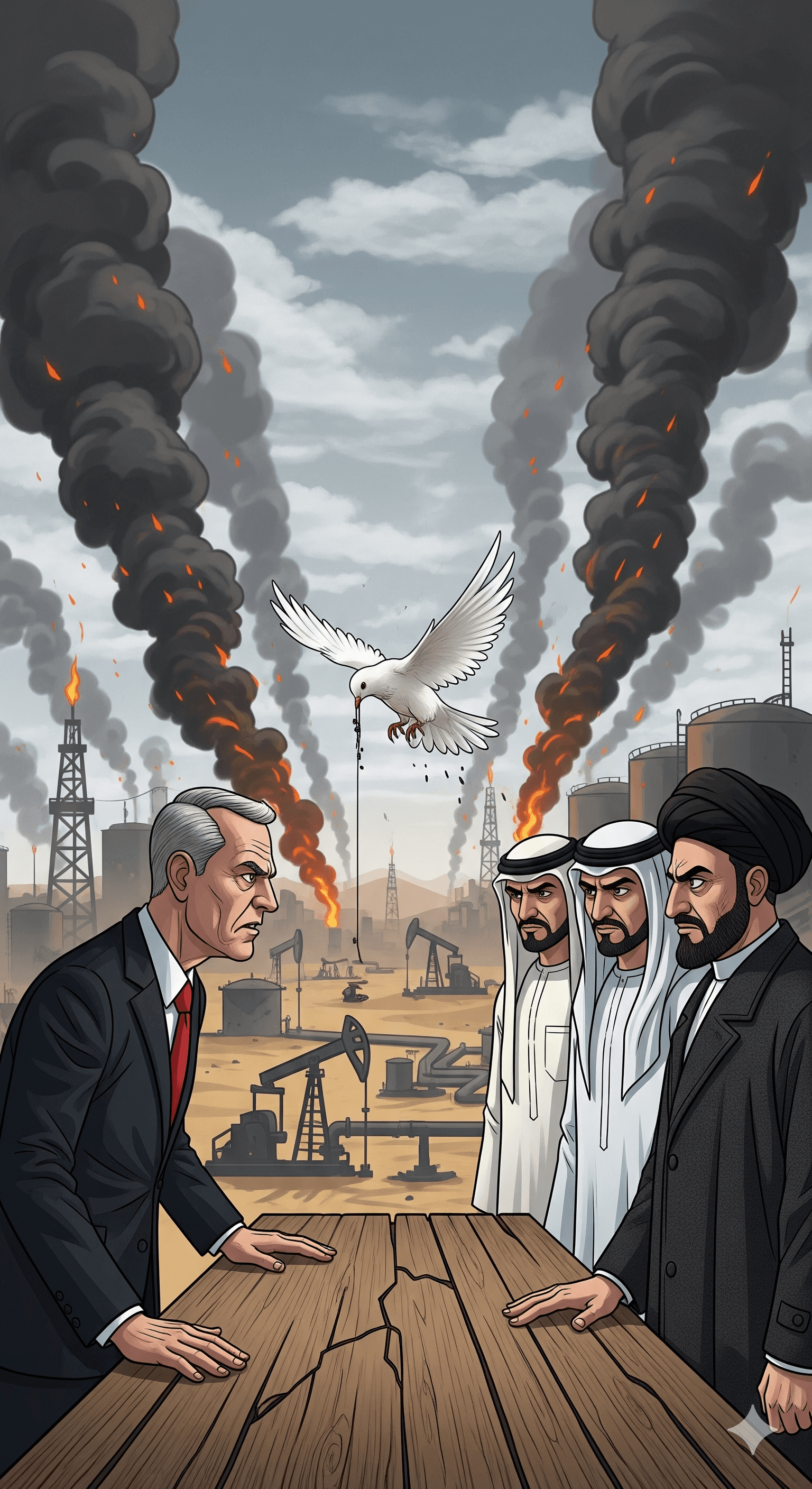
The past forty-eight hours have seen a dramatic spike in direct hostilities. Reports indicate a series of coordinated drone and ballistic missile strikes targeting critical infrastructure across the Persian Gulf. While official damage assessments are still being heavily guarded, initial intelligence suggests that oil refining facilities, military command centers, and key logistical hubs in both Iran and several Gulf states have been impacted.
These strikes represent a significant departure from the localized proxy skirmishes that have characterized the last few years. The direct nature of these cross-border attacks signals a dangerous willingness by the involved parties to risk broader escalation. In response to the strikes, commercial shipping companies have begun rerouting vessels away from the Strait of Hormuz, and global energy markets have reacted with immediate volatility, sending crude oil prices surging amidst fears of prolonged supply chain disruptions.
Key Countries and Stakeholders
The United States finds itself in a precarious position as the primary external security guarantor for the Gulf states. Washington’s immediate goal is to protect its allies and ensure the free flow of global commerce while strictly avoiding being drawn into another protracted Middle Eastern conflict.
The Gulf states—primarily Saudi Arabia and the UAE—are attempting to balance their defense requirements with their ambitious domestic economic transformation plans. Both nations have recently signaled a desire for diplomatic detente with Tehran to focus on internal growth, making the resumption of violence a significant strategic setback.
Iran remains a central and highly complex actor. Facing severe domestic economic pressures due to international sanctions, Tehran relies on its asymmetric military capabilities and regional alliances to project power and deter direct attacks on its soil. For Iranian leadership, demonstrating the ability to strike back decisively is viewed as a crucial component of national survival and regional leverage.
Strategic Motivations
The motivations driving this sudden escalation are multifaceted. For the United States, the strategic imperative is containment. A swift end to the war is necessary not only for global economic stability but also for Washington’s broader strategic pivot, which requires shifting focus and military resources toward other global theaters, particularly the Indo-Pacific.
For the Gulf states, the motivation is deeply tied to their economic futures. Initiatives like Saudi Arabia's Vision 2030 require a stable regional environment to attract foreign direct investment. Extended conflicts and the persistent threat of infrastructure attacks actively undermine these long-term national objectives.
Iran’s calculations are heavily influenced by the desire for sanctions relief and the establishment of a new security paradigm in the Middle East—one that forces international actors to acknowledge Tehran’s sphere of influence. By demonstrating that Gulf security is intrinsically linked to Iranian security, Tehran hopes to force a diplomatic recalibration on its own terms.
Regional and Global Implications
The implications of a sustained conflict between Iran and the Gulf states extend far beyond the borders of the Middle East. The region is the nerve center of the global energy supply. Any prolonged disruption to the extraction, refinement, or transportation of oil and liquefied natural gas (LNG) out of the Persian Gulf would have an immediate cascading effect on the global economy, likely triggering high inflation and halting economic growth in both developed and developing nations.
Furthermore, a wider war threatens to draw in other global powers. As the US works to mediate, adversaries and competitors on the global stage are closely monitoring the situation, potentially looking to exploit any American overextension. The conflict also risks exacerbating humanitarian crises in neighboring countries where proxy factions operate, potentially leading to new waves of displacement and regional instability.
Outlook
The coming days will be critical in determining the trajectory of the Middle East. The US is expected to leverage a combination of intense diplomatic pressure, back-channel negotiations, and the deployment of defensive military assets to deter further strikes. However, the success of a "swift end to the war" heavily depends on the willingness of both Iran and the Gulf states to accept a mutual de-escalation framework.
If diplomatic off-ramps can be successfully identified and utilized, the region may return to a tense, but manageable, cold war footing. However, if the cycle of retaliation continues to accelerate, the localized attacks could rapidly metastasize into a regional conflagration that fundamentally alters the geopolitical landscape for a generation. The world now waits to see if diplomacy can outpace the drums of war.