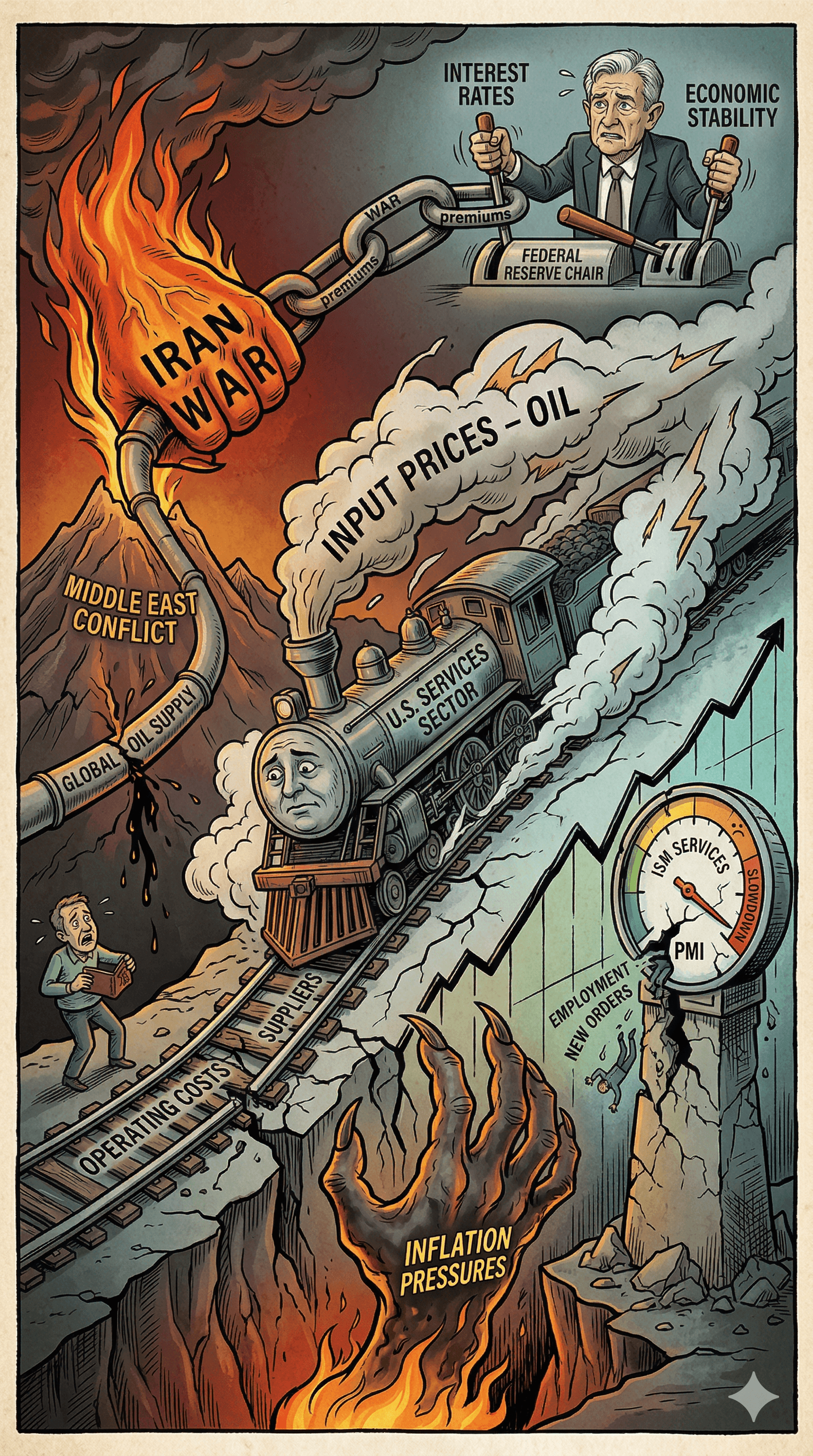
WASHINGTON — The pulse of the American economy showed signs of a rhythmic slowdown in March as the intensifying conflict with Iran sent shockwaves through global energy markets, driving up operating costs for the nation’s dominant services sector. According to the latest data from the Institute for Supply Management (ISM), while the sector remains in expansion territory, the "goldilocks" period of cooling inflation and steady growth appears to have been disrupted by geopolitical volatility.
The ISM Services PMI—a critical gauge of the industries that make up more than two-thirds of the U.S. economy—slipped to 54.0% in March, down from 56.1% in February. While any reading above 50% indicates growth, the 2.1-percentage-point drop underscores a growing caution among business leaders as the "war-risk premium" becomes a tangible line item on balance sheets.
The "Iran Premium": Energy Spikes and Input Costs
The most alarming figure in the March report was the Prices Index, which soared to 70.7%, a staggering 7.7-percentage-point jump from the previous month. This represents the highest reading for services-sector inflation since late 2022 and marks the largest one-month increase in over a decade.
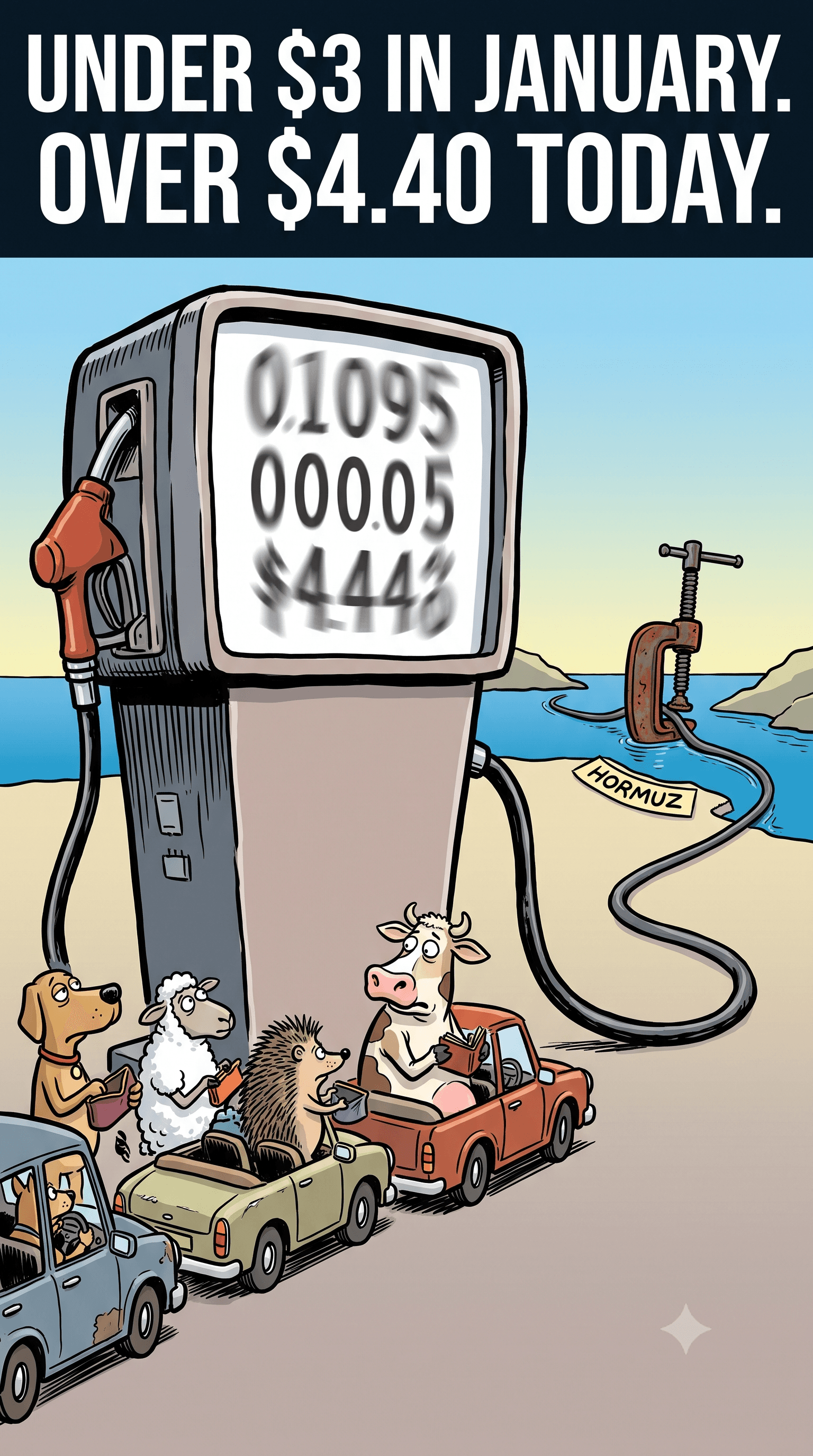
Economists attribute this vertical climb directly to the outbreak of hostilities in the Middle East. With the U.S. and Israel engaged in a military confrontation with Iran, global oil prices have surged by more than 30%, pushing the national average for regular gasoline above $4.10 per gallon. Diesel prices have seen an even sharper spike, crossing the $5.60 mark in many regions.
“The war in Iran has added an additional layer of uncertainty on top of an already shaky macroeconomic climate,” noted one respondent from the real-estate industry in the ISM survey. This sentiment was echoed across 13 of the 16 industries tracked, with many reporting that higher fuel and energy costs are beginning to "bleed through" into the price of everything from shipping and logistics to food services.
Employment Contraction and Supply Chain Stress
Beyond rising costs, the March data revealed a troubling trend in the labor market. The Services Employment Index tumbled into contraction territory, falling to 45.2% from 51.8% in February. This 6.6-point drop is one of the most significant monthly declines since the pandemic era, suggesting that firms are freezing hires or reducing overhead as they brace for a prolonged period of high energy costs.
Supply Chain Disruptions and the Strait of Hormuz
The conflict has not only affected prices but also the physical movement of goods. The Supplier Deliveries Index rose to 56.2%, indicating slower delivery times.
Logistics Under Fire: Threats to the Strait of Hormuz, a vital artery for global energy and trade, have led to "war-risk surcharges" for ocean and air freight.
Inventory Hoarding: Fearing further disruptions, many companies reported a strategic increase in inventories (registering 54.8%) as a hedge against potential shortages of energy-derived products, such as fertilizers and chemicals.
Sector Impact: While 13 industries grew, the retail, agriculture, and public administration sectors reported outright declines in activity, citing the immediate impact of fuel costs on consumer discretionary spending.
The Federal Reserve’s "Higher-for-Longer" Dilemma
For the Federal Reserve and Chair Jerome Powell, the March data is a significant setback. Prior to the escalation in the Middle East, markets had been pricing in a series of interest rate cuts beginning in the summer. That outlook has now shifted dramatically.
The jump in the Prices Index suggests that the Consumer Price Index (CPI), due for release later this week, could see a sharp reversal of recent downward trends. Analysts at BMO Capital Markets and S&P Global warned that the "sticky" nature of services inflation—now exacerbated by an external energy shock—makes it increasingly difficult for the Fed to justify loosening monetary policy.
"The service sector is still expanding, but headwinds are picking up," said Priscilla Thiagamoorthy, a senior economist at BMO Capital Markets. "With employment softening and inflation pressures flaring up again, the data reinforces the case for patience from the Fed."
Current projections now suggest the central bank may keep the benchmark overnight interest rate in its current 3.50% to 3.75% range well into the second half of the year, or perhaps through 2026, depending on the duration of the conflict.
Geopolitical Wildcards: Tariffs and Trade
The economic landscape is further complicated by shifting trade policies. While the U.S. Supreme Court recently struck down a previous administration’s reciprocal tariffs, the current executive response has been the implementation of a temporary "global tariff" for up to 150 days to manage trade imbalances during the war.
Respondents in the wholesale trade and manufacturing-adjacent service sectors noted that while the tariff rollbacks provided some relief earlier in the year, the "new implementation is driving continued uncertainty." The combination of trade barriers and war-related logistics costs is creating a "perfect storm" for supply chain managers trying to maintain margin stability.
Outlook: A Period of "Stagflationary" Risk?
The primary concern for the remainder of the second quarter is whether the U.S. is entering a "stagflationary" environment—characterized by slowing growth and rising prices. While the New Orders Index remained resilient at 60.6%, suggesting that demand for services like digital transformation and cloud computing remains high, the cost of delivering those services is climbing.
The resilience of the American consumer will be tested in the coming weeks as the "bleed-through" effect of $4+ gasoline reaches grocery store shelves and utility bills. If the Iran conflict persists, the pressure on the services sector—the engine of U.S. GDP—could transition from a "cooling" phase to a broader contraction.
Impact and Future Outlook
The immediate impact of the Iran war on the U.S. services sector is a stark reminder of the economy's vulnerability to energy shocks. As of April 2026, the trajectory of the U.S. economy depends heavily on the de-escalation of Middle East tensions. Should the conflict remain contained, the services sector's inherent resilience—driven by technology and healthcare demand—may prevent a full recession. However, a prolonged blockade or a further surge in oil prices toward $120 per barrel would likely force the Federal Reserve into a defensive posture, prioritizing inflation control even at the cost of higher unemployment.