WASHINGTON/TEHRAN — The escalating US-Israel military campaign against Iran reached a critical juncture on Friday, as United States Secretary of Defense Pete Hegseth announced the launch of the "most intense" wave of airstrikes since the conflict began. In a major intelligence disclosure, the Pentagon also claimed that Iran's newly appointed Supreme Leader, Mojtaba Khamenei, has been wounded and is "likely disfigured" following recent bombardments.
Entering its fourteenth day, the conflict—dubbed "Operation Epic Fury" by US officials—has fundamentally altered the geopolitical landscape of the Middle East. With global oil markets reacting to threats in the Strait of Hormuz and mounting humanitarian concerns, the war shows no immediate signs of a ceasefire.
The Hunt for Iran’s New Leadership
The succession of Iranian leadership has been thrust into chaos since the war's opening salvos on February 28, 2026, which killed long-standing Supreme Leader Ayatollah Ali Khamenei. His son, Mojtaba Khamenei, was rapidly elevated to the position but has conspicuously avoided public video or audio appearances.
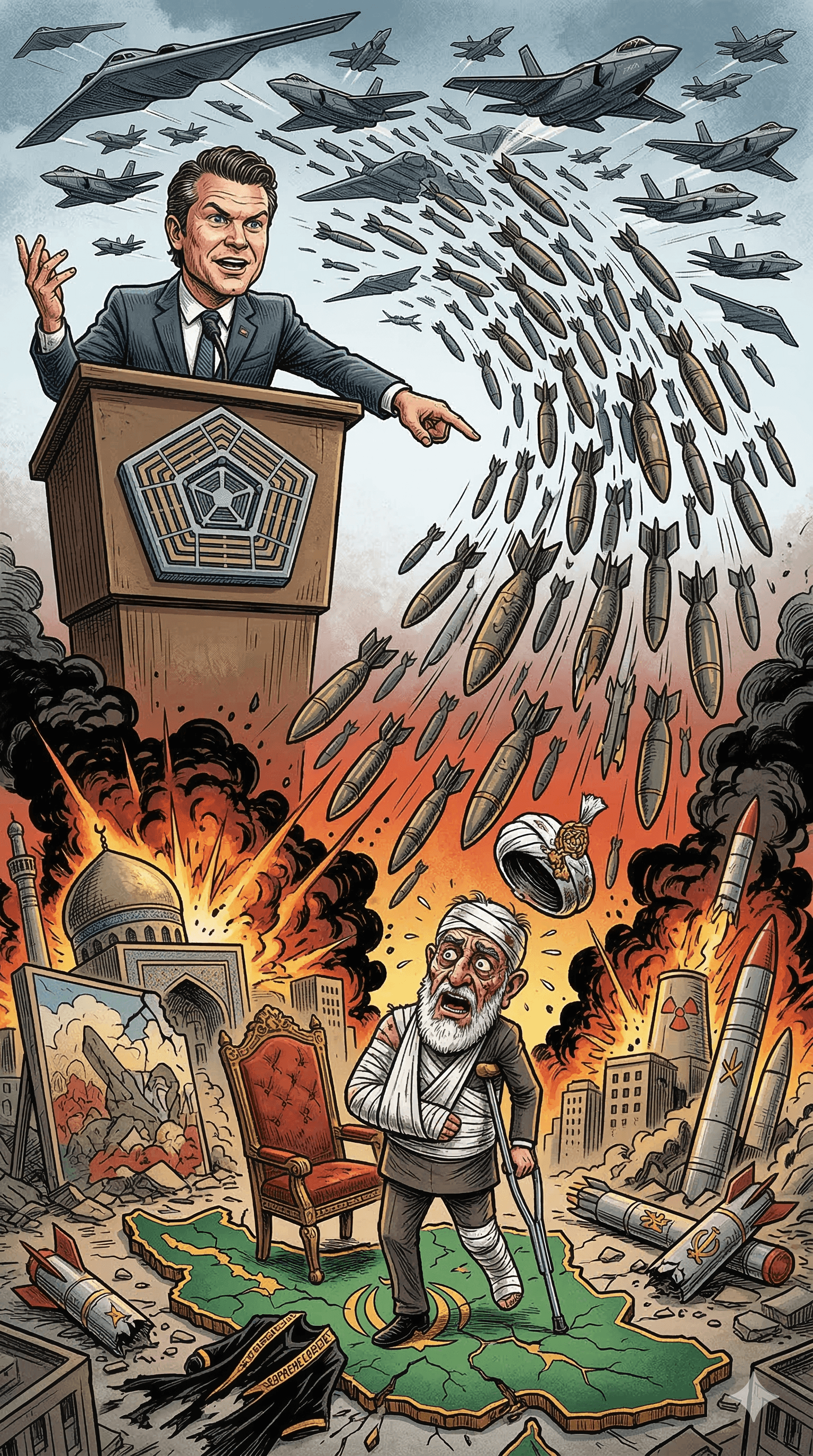
During a press briefing on Friday at the Pentagon, Defense Secretary Pete Hegseth weaponized this absence, openly questioning the new leader's physical condition and authority.
"We know the new so-called, not-so-supreme leader is wounded and likely disfigured," Hegseth told reporters, flanked by Gen. Dan Caine, Chairman of the Joint Chiefs of Staff. "Iran has plenty of cameras and voice recorders. Why a written statement? I think you know why. He's scared, he's injured, he's on the run, and he lacks legitimacy."
Mojtaba Khamenei’s first official communication as Supreme Leader was delivered via a written statement read on Iranian state television on Thursday. In it, he vowed relentless retaliation, pledged to keep the strategic Strait of Hormuz closed to shipping, and urged neighboring nations to expel US military bases. Iranian officials previously acknowledged to state media that the new leader was "lightly injured" but remained in operational control.
Operation Epic Fury: The 'Most Intense' Day of Strikes
The military reality on the ground reflects a devastating asymmetry. According to the Pentagon, US and Israeli forces have systematically dismantled Iran's defensive infrastructure.
Hegseth declared Friday as the highest volume day of strikes yet, with American bombers and fighter jets "picking targets as they choose" in the skies over Tehran. The allied forces have reportedly struck over 15,000 targets—averaging well over 1,000 strikes a day.
"Iran has no air defenses. Iran has no Air Force. Iran has no Navy," Hegseth stated, claiming that the country's ballistic missile volume has been degraded by 90%, and its one-way attack drone capabilities have fallen by 95%. "We will keep pressing, keep pushing, keep advancing. No quarter, no mercy for our enemy."
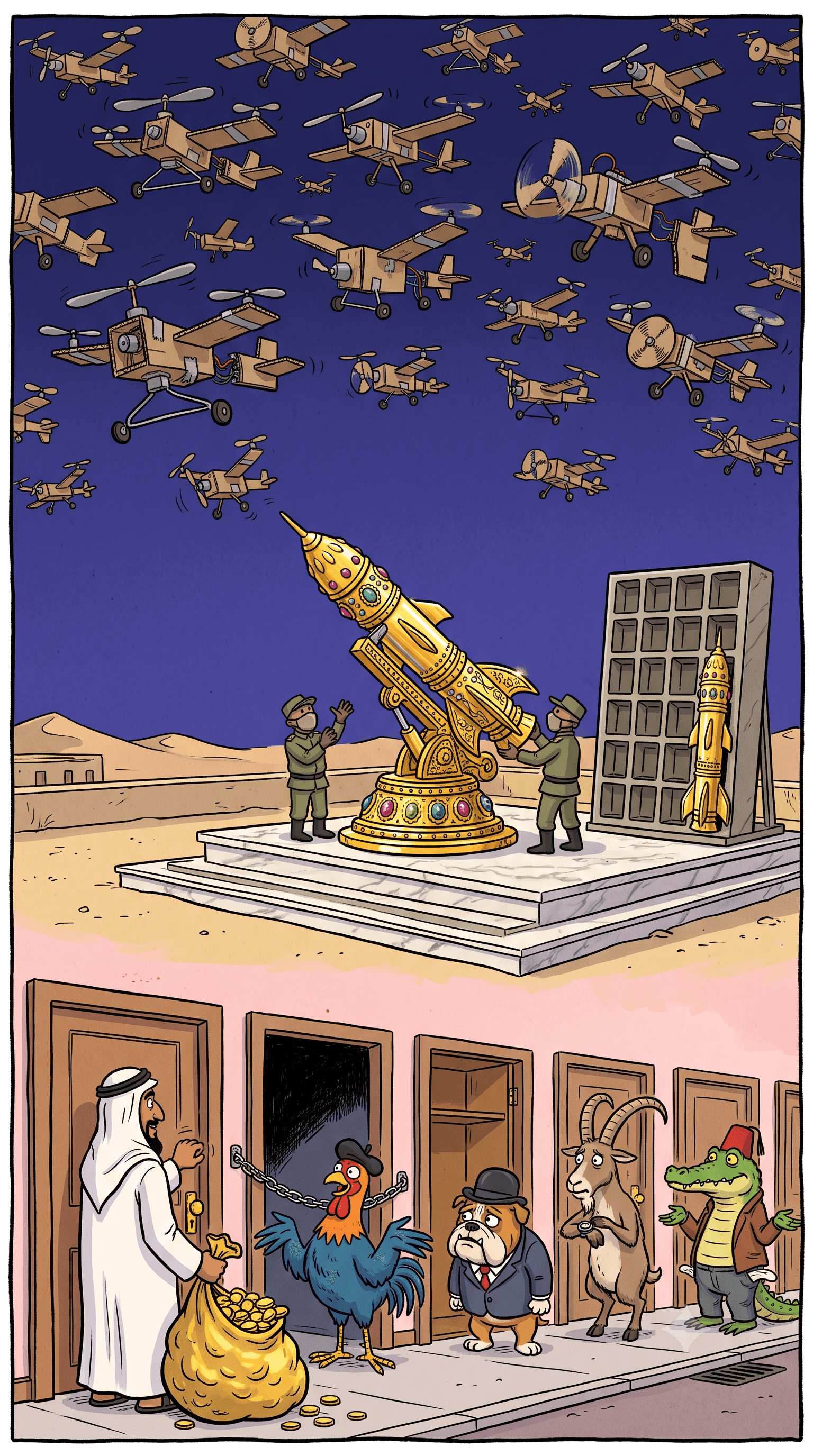
Despite the overwhelming aerial superiority, Iranian forces and their regional proxies have continued to launch sporadic drone and missile attacks toward Israel and Gulf Arab states hosting US military assets, though the frequency of these retaliatory strikes has dropped sharply in recent days.
The Strait of Hormuz and Global Economic Fallout
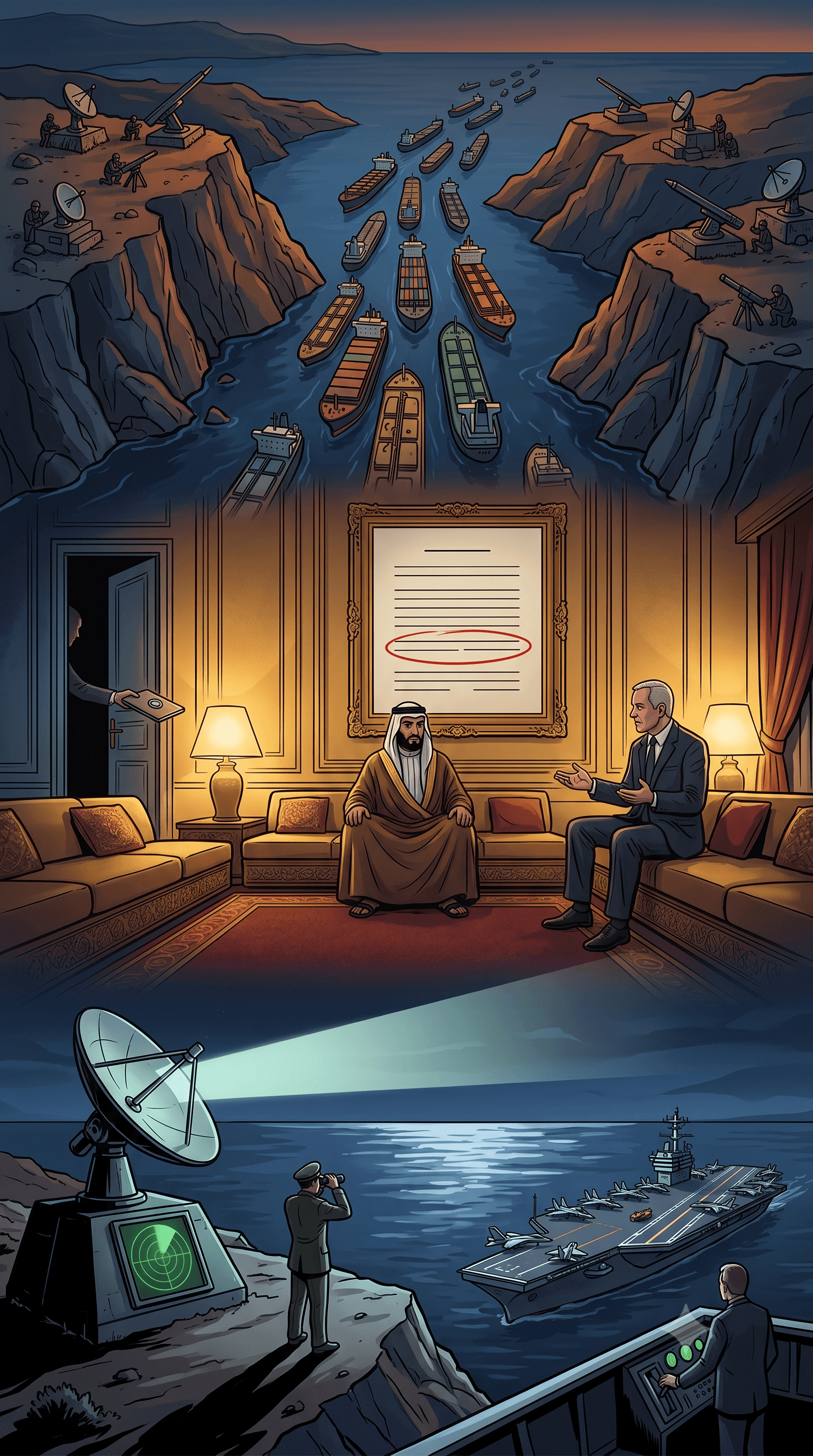
Beyond the military theater, the conflict has triggered severe anxieties within the global economy. The Strait of Hormuz, a narrow maritime chokepoint responsible for the transit of roughly 20% of the world's daily oil consumption, has become a central flashpoint.
In his written statement, Mojtaba Khamenei ordered the continued closure of the strait. However, Hegseth dismissed the threat as an act of "sheer desperation," asserting that the US military has effectively neutralized Iran's mine-laying vessels and will not permit the corridor to be contested.
Despite Pentagon reassurances, the mere threat of disruption has sent shockwaves through energy markets. Oil prices hovered near the $100-a-barrel mark on Friday. In Washington, US President Donald Trump issued a stern warning, stating he would order the military to hit Iran "twenty times harder" if Tehran successfully impeded the flow of global crude.
Humanitarian Crisis and the School Strike Investigation
As the military campaign intensifies, the humanitarian toll inside Iran is mounting rapidly. According to recent figures from the World Health Organization, at least 1,300 people have died and over 9,000 have been injured since the US strikes on Iran began late last month.
The Biden-Trump transition of power saw a highly aggressive shift in military posture, but the Pentagon is now facing international scrutiny over civilian casualties. The most severe incident involves a strike on the Shajareh Tayyebeh girls' elementary school in southern Iran, which reportedly killed at least 165 people, many of them children.
Addressing the tragedy, Hegseth announced that US Central Command (CENTCOM) has appointed an independent, general-level investigating officer from outside its own ranks to conduct a thorough review. While maintaining that the US "never targets civilians," Hegseth accused Iranian forces of deliberately moving rocket launchers into civilian neighborhoods and near medical facilities to deter American strikes.
Impact and Strategic Outlook
As the war enters its third week, the strategic outlook remains highly volatile. President Donald Trump has publicly claimed that the conflict could end "soon," suggesting that the US military has effectively run out of meaningful targets to destroy. However, the lack of a clear off-ramp or diplomatic channel complicates the endgame.
For Iran, the strategy appears focused on survival and asymmetrical economic warfare, attempting to generate enough global economic pain via the Strait of Hormuz to force an international intervention. For the United States and Israel, the objective remains the total decimation of Iran's nuclear, naval, and ballistic capabilities.
If Hegseth's claims regarding Mojtaba Khamenei's physical condition are accurate, the Iranian regime faces a compounding crisis: fighting a multi-front war with degraded military hardware while simultaneously navigating a fragile, potentially contested leadership transition.
#news #geopolitics #IranWar #USMilitary #PeteHegseth #MojtabaKhamenei #MiddleEastConflict #StraitOfHormuz #GlobalEconomy #DonaldTrump #DefenseNews #InternationalRelations