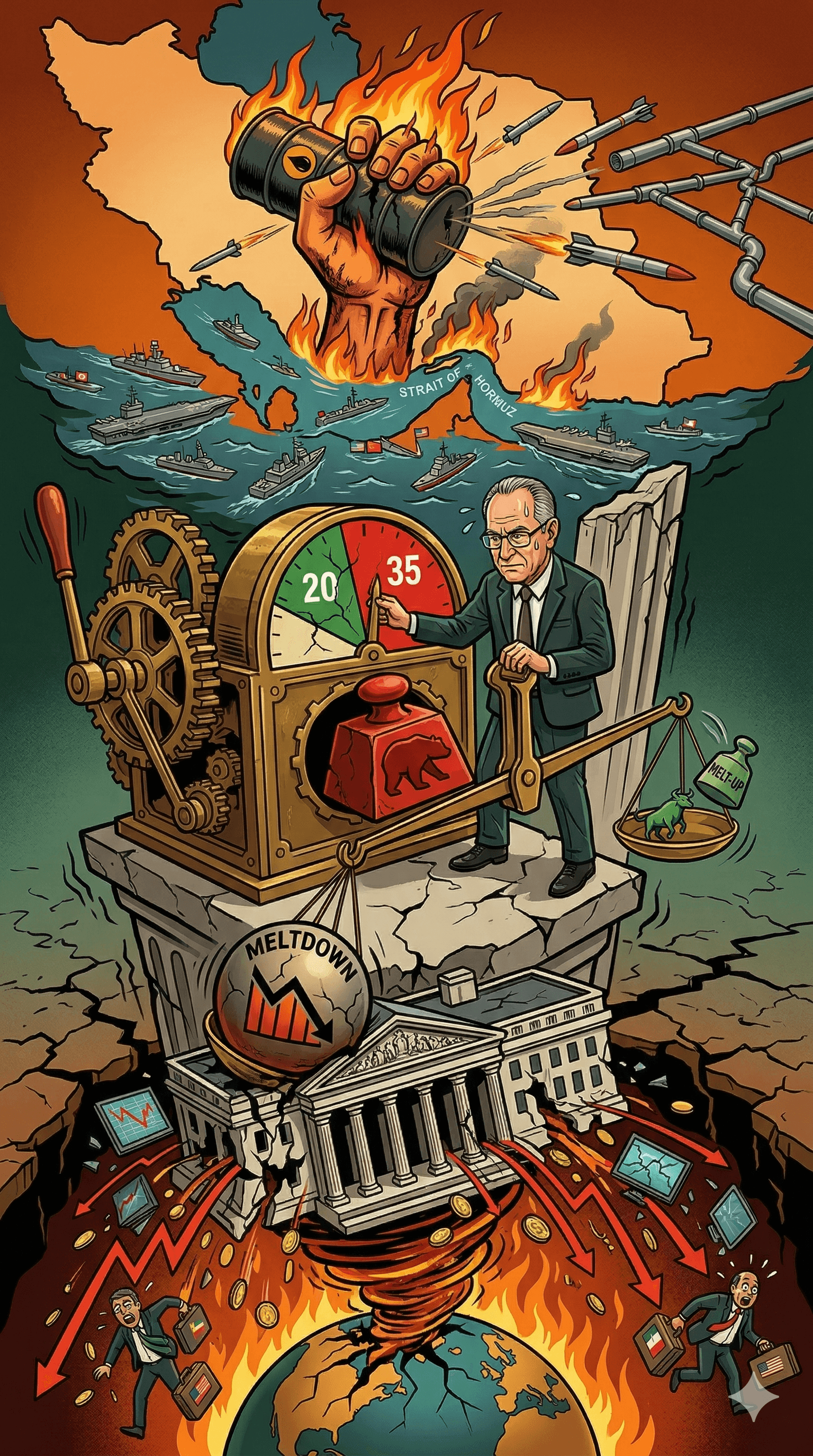
NEW YORK — Financial markets are facing a growing risk of a sharp and sudden selloff this year as the escalating war in Iran disrupts global supply chains and sends energy prices soaring. In response to these fast-moving geopolitical developments, veteran market strategist Ed Yardeni has significantly revised his economic outlook, raising the probability of a U.S. stock market meltdown to 35% for the remainder of the year, up from his previous estimate of 20%. The stark warning comes as crude oil prices surge past the $100-a-barrel threshold, rattling global investors and complicating monetary policy for central banks worldwide.
The Reassessment: Why Yardeni Sees a 35% Meltdown Risk
Ed Yardeni, the founder of Yardeni Research and a closely followed voice on Wall Street, noted that the current geopolitical climate is forcing a rapid reassessment of market fundamentals. Alongside increasing the odds of a market meltdown to 35%, Yardeni slashed the probability of a "meltup"—a sustained market rally driven by intense investor enthusiasm and momentum rather than underlying economic health—from 20% down to a mere 5%.
This dramatic shift in sentiment underscores the growing uncertainty gripping financial centers. For months, markets had been buoyed by the prospect of easing inflation and anticipated interest rate cuts from the Federal Reserve. However, the widening conflict in the Middle East has upended these bullish scenarios.
"The US economy and stock market are stuck between Iran and a hard place currently," Yardeni wrote in a recent note to clients. "So is the Fed."
The Catalyst: Iran War and the $100 Oil Shock
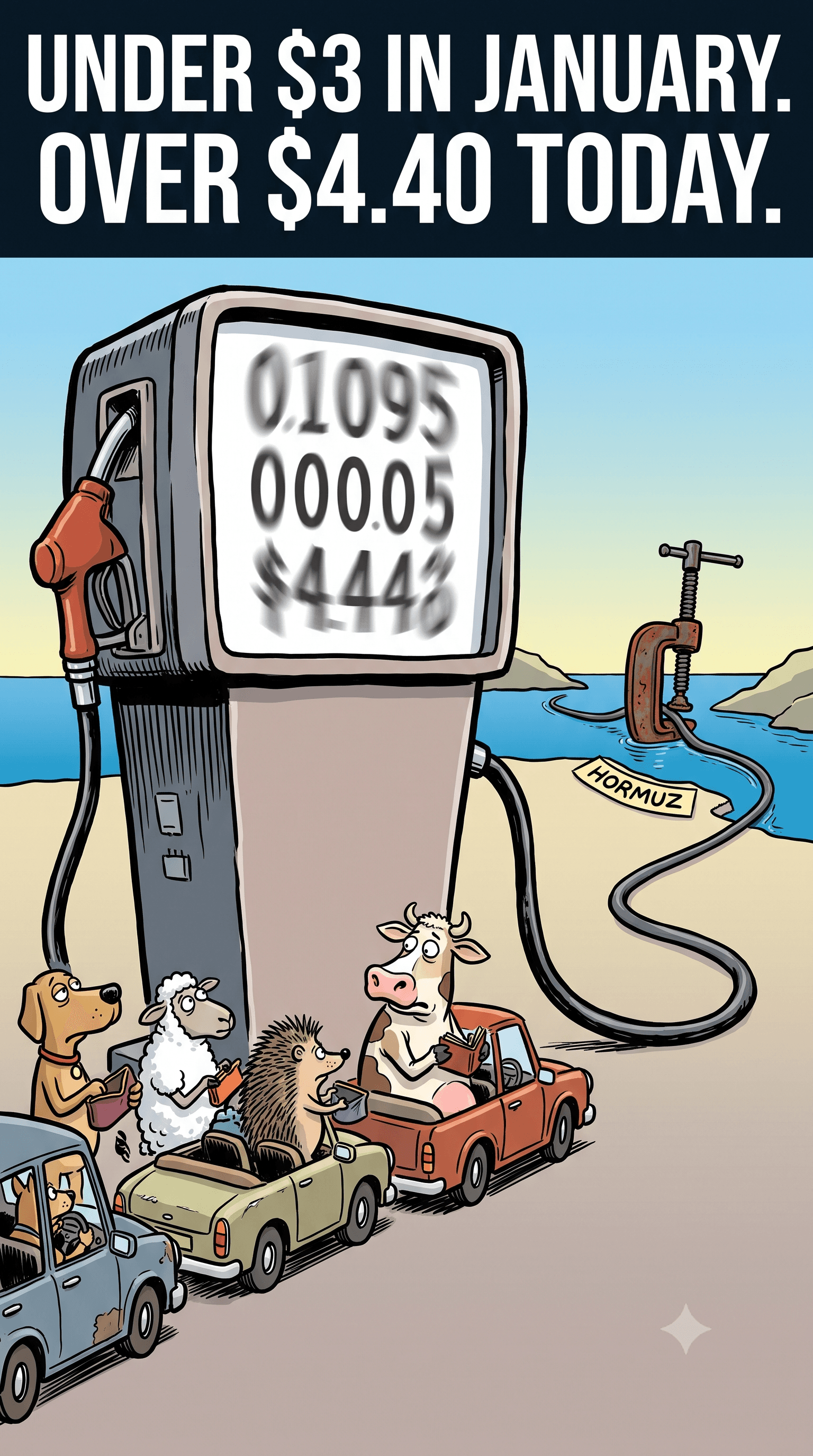
The primary driver behind this heightened risk is the direct and indirect fallout from the escalating Iran war risks. The conflict has raised the specter of severe supply disruptions in one of the world's most critical energy-producing regions. As military engagements intensify, crude oil prices have rapidly breached the $100-a-barrel mark, a psychological and economic threshold that historically triggers alarm bells for the global economy.
The sharp rise in energy costs acts as a regressive tax on consumers and businesses alike, threatening to slow down economic growth while simultaneously pushing inflation higher. This dreaded combination—often referred to as stagflation—has quickly become a central concern for market participants. The threat is particularly acute given the strategic importance of the Strait of Hormuz, a vital maritime chokepoint through which a significant portion of the world's crude oil and liquefied natural gas (LNG) flows.
Asian Markets Highly Vulnerable to Supply Disruptions
While U.S. equities face rising downside risks, the economic tremors are being felt even more acutely across Asia. The region’s heavy reliance on Middle Eastern energy imports makes it uniquely vulnerable to the current oil shock. Countries like China, India, and Indonesia, which rank among the world's largest oil importers, are bracing for the economic fallout.
Meanwhile, nations such as South Korea and Taiwan, which are heavily dependent on gas-fired power and uninterrupted Gulf supply chains to fuel their massive tech manufacturing sectors, are highly exposed. In response to the crisis, governments across the region are scrambling to implement market-stabilization measures. South Korean and Taiwanese authorities are reportedly exploring ways to cap domestic fuel costs and stem equity losses as global funds reduce their risk exposure in emerging markets.
"I am raising cash levels because if the Middle East crisis continues for a long time, the probability of economic recession or stagflation will inevitably increase," noted Hironori Akizawa, a fund manager at Tokio Marine Asset Management.
The Federal Reserve’s Dual Mandate Dilemma
The geopolitical turmoil and subsequent oil spike have placed the U.S. Federal Reserve in a precarious position. The central bank operates under a dual mandate: to promote maximum employment and maintain stable prices. According to Yardeni, if the oil shock persists, the Fed will find itself trapped between the increasing risk of higher inflation and the threat of rising unemployment.
Before the conflict erupted, traders had fully priced in a quarter-point interest rate cut by July. However, the renewed inflationary pressures stemming from $100 oil have forced a drastic repricing in bond markets. Investors have now pushed back expectations for the Fed's next rate cut to September, with some bond options traders betting that the central bank may not cut rates at all in 2026. This higher-for-longer interest rate environment places additional strain on corporate earnings and consumer borrowing, further increasing the odds of a market correction.
Market Reaction: Flight to Safety and AI Sector Scrutiny
As the macro outlook darkens, financial markets have initiated a clear shift toward defensive positioning. The Bloomberg Dollar Spot Index has climbed nearly 2% since the war intensified, highlighting a robust flight to safe-haven assets. Gold has also surged to multi-week highs as investors seek stores of value insulated from geopolitical volatility.
Simultaneously, the geopolitical shock is colliding with another major market narrative: the artificial intelligence (AI) capital-expenditure cycle. For the past year, massive investments in AI infrastructure by major technology companies have been a primary driver of stock market gains. However, as economic uncertainty mounts, signals regarding the durability of this tech spending are facing heightened scrutiny. Investors are beginning to question whether corporations will maintain their aggressive AI investments if the broader economy slips into a stagflationary environment.
Economic Outlook and Global Impact
The coming months will be critical in determining whether the global economy can absorb the shocks emanating from the Middle East. If diplomatic efforts fail to contain the conflict and energy prices remain structurally elevated, the 35% probability of a market meltdown outlined by Ed Yardeni could quickly become a baseline reality.
For global investors, the current environment demands extreme vigilance. The transition from a market defined by optimism regarding rate cuts to one dominated by stagflation fears and geopolitical risk requires a careful reassessment of portfolio allocations. While U.S. equities have shown some resilience compared to their global peers, the compounding pressures of an oil shock, delayed monetary easing, and potential supply chain bottlenecks present formidable headwinds.
Ultimately, the trajectory of global markets in 2026 will heavily depend on the duration and severity of the Iran conflict. Until there is clarity on the geopolitical front, volatility is expected to remain the defining characteristic of the global financial system.
#MarketMeltdown #EdYardeni #IranWar #GlobalEconomy #OilPrices #Stagflation #FederalReserve #Geopolitics #StockMarket #Investing #EnergyCrisis #MacroEconomics