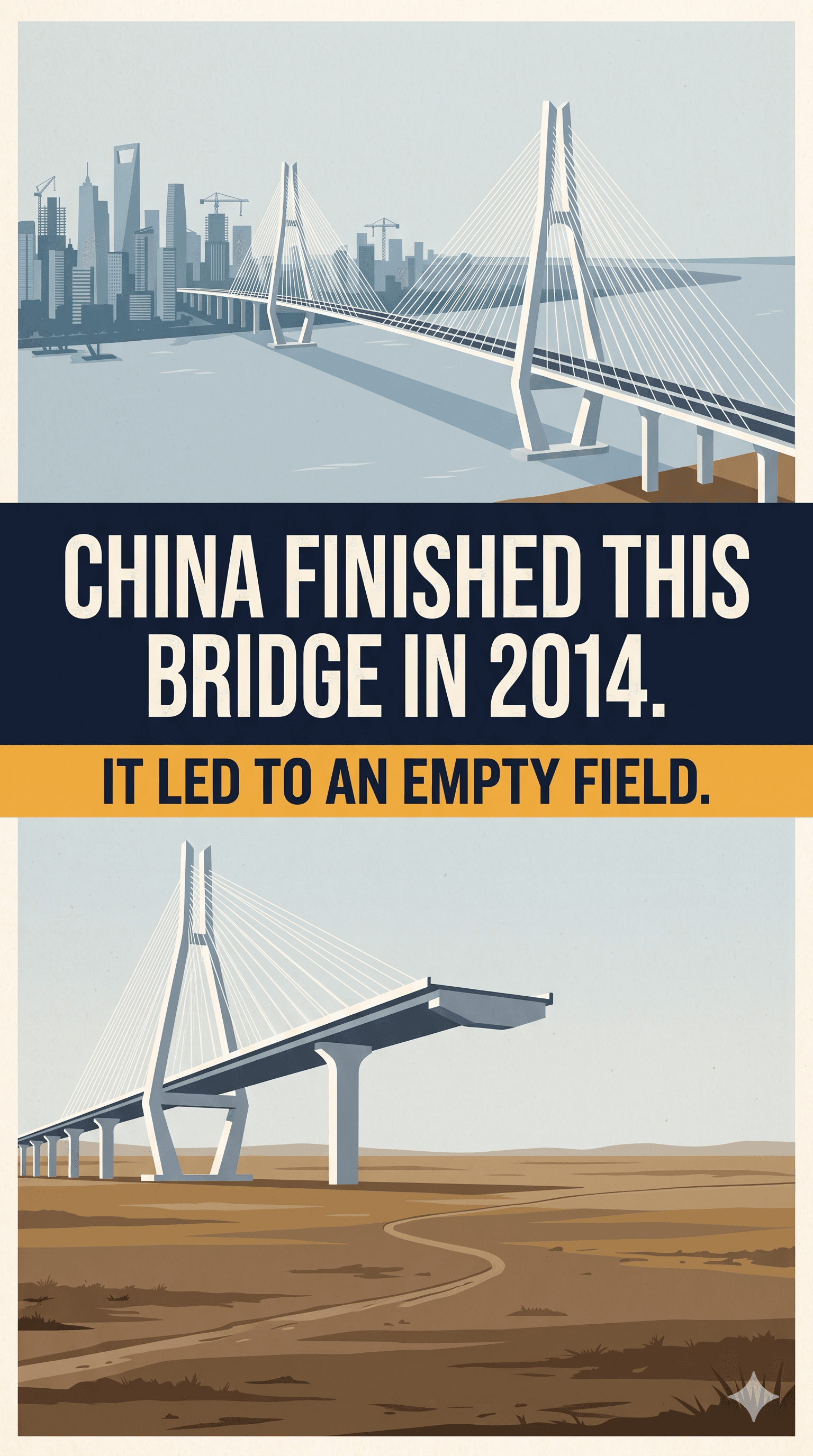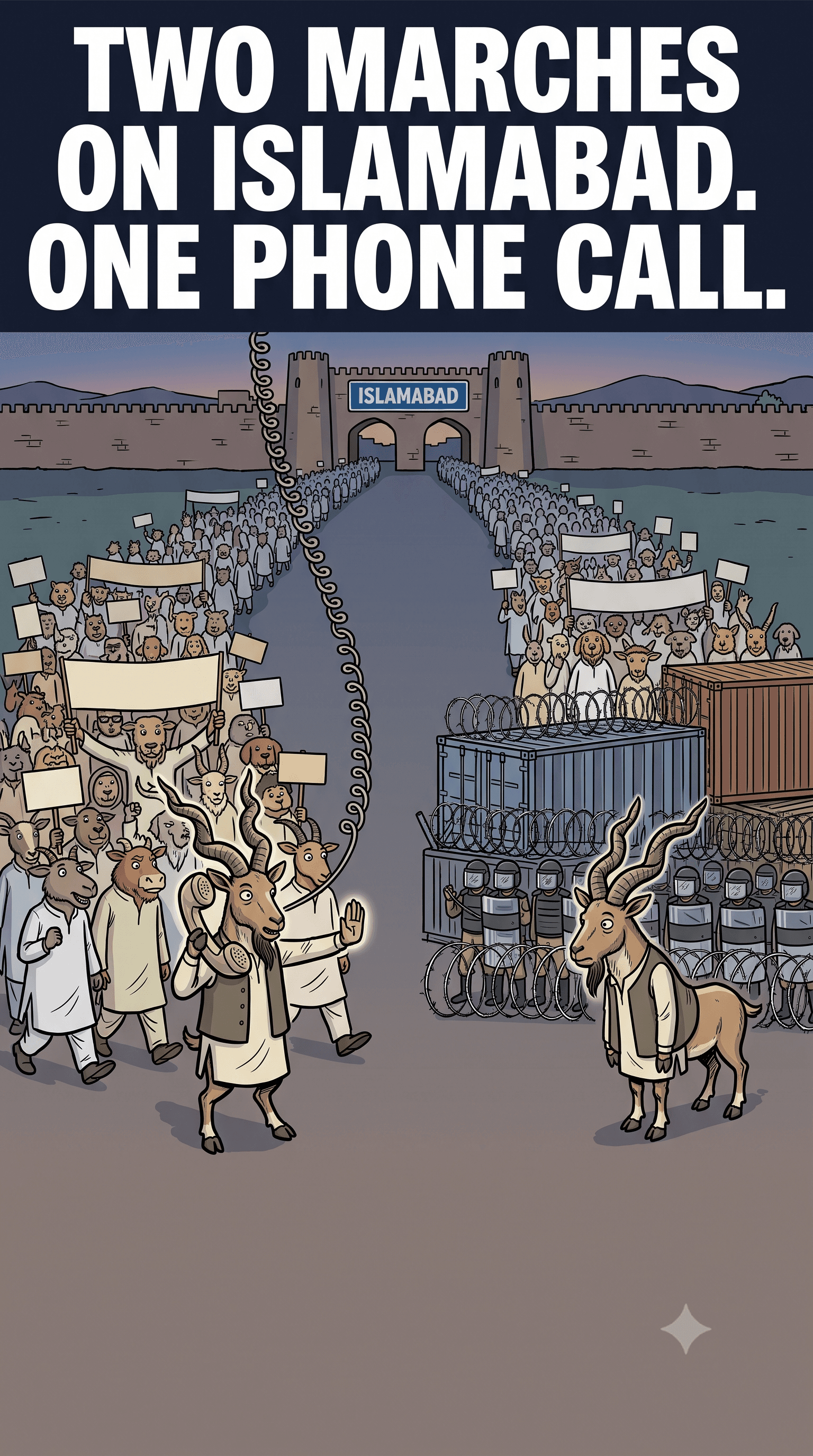
On 23 September a letter went to the President of the UN Security Council asking it to recognise the Republic of Balochistan. It was correctly addressed, courteously written, and had absolutely nowhere to go. Here is why — and what the actual route looks like.
The letter is real, it is public, and somebody took some trouble over it.
It is addressed to the President of the United Nations Security Council, United Nations Headquarters, 405 East 42nd Street, New York, NY 10017 — which is, correctly, the UN's street address. It is dated 23 September 2026. It is laid out in proper diplomatic form, with a subject line, numbered requests, and a concluding appeal. It is signed "THE REPUBLIC OF BALOCHISTAN."
It asks the Council to do five things: examine Balochistan's historical status, consider recognising it as an independent state, establish international human rights monitoring, investigate Pakistani military operations, and create a diplomatic mechanism for a political settlement.
It was published on Truth Social, and republished by an Indian news site.
Now. The grievances in that letter are serious and some of them are genuinely disputed history rather than invention, and we will get to all of that properly. But first, the mechanical question, because it is the one nobody explains and it is quietly hilarious:
What actually happens to this letter?
Nothing. Not as a slight — as a matter of plumbing.
Here is the thing almost everyone gets wrong, including many people who write about this for a living.
The United Nations does not recognise countries. It cannot. Recognition is something states do to other states, one at a time, at their own discretion. What the UN does is admit members, which is a different thing with a different procedure.
That procedure is Article 4 of the Charter, and it is two sentences long. Admission happens "by decision of the General Assembly upon the recommendation of the Security Council." Which means the sequence is:
The Security Council must recommend you. That needs nine votes out of fifteen, and no veto from any of the five permanent members.
Only then does the General Assembly vote, where you need a two-thirds majority.
Step one is where everything dies. And there is a prior step that is even more basic:
The Security Council has no inbox for this. There is no clerk who opens correspondence from non-members and puts it on the agenda. A document becomes an official Council document when a member state asks for it to be circulated. That is the mechanism. That is the whole mechanism.
So the first thing a would-be state needs is not a letter. It is a sponsor — one existing member state willing to put its own name on the request. Without that, the most beautifully drafted letter in the world is a PDF.
And then there is the specific problem here, which is not subtle. China is a permanent member with a veto. Pakistan is China's closest strategic partner. Gwadar — named in the letter as one of Balochistan's assets — is the terminus of the China–Pakistan Economic Corridor. This is not a close call. It is not even a call.
The queue is real, and it is very long
This is the part worth knowing, because it tells you what recognition actually turns on — and it isn't the merits of your case.
Somaliland declared independence in 1991. It has a government, a currency, its own passports, elections that have produced peaceful transfers of power, and thirty-five years of functioning statehood. Recognitions: none.
Kosovo declared in 2008 and has been recognised by a large number of states. It has no UN seat, because the Council is where membership is decided and the arithmetic there doesn't work.
Palestine has been a non-member observer state since 2012. Full membership has been blocked at the Council.
Taiwan has a population, a territory, a government, an economy larger than most member states, and lost its seat in 1971.
Notice what these have in common. None of them failed for lack of a good argument. They failed, or are waiting, because of who sits at a particular table. Recognition is not a court. It is a queue, and the people who run the queue have preferences.
What the law actually asks for
The working test is the 1933 Montevideo Convention, and it is refreshingly blunt. A state needs: a permanent population, a defined territory, a government, and the capacity to enter into relations with other states.
The important word is has. Not claims. Declaring a republic does not produce a population you administer, a territory you control, a government that collects taxes, or an embassy anyone answers. Those either exist or they don't, and a declaration doesn't manufacture them.
This is why declarations are cheap and statehood is expensive.
The letter, checked
Now the part that matters if the goal is actually recognition rather than attention — because the first thing any mission does with a document like this is check the numbers, and it takes about ninety seconds.
"Sixty million people of Balochistan" — wrong, by roughly four times. Pakistan's 2023 census puts Balochistan province at 14,894,402. Even counting Baloch populations in Iran, Afghanistan and elsewhere in Pakistan, credible estimates land somewhere under twenty million. Sixty is not a defensible figure in any reading.
"Approximately two-thousand-kilometre-long coastline" — wrong, by about double. Pakistan's entire coastline is commonly given as around 1,046 kilometres, and Balochistan has a large part of it but not all of it. The letter claims roughly twice the whole country's shoreline.
"Pakistani forces restricted in 85% of Balochistan's areas" — an unverified claim by one party. No independent corroboration exists for this figure, and it sits awkwardly beside the fact that Pakistan administers the province, collects its revenues and runs its ports.
The 1947–48 accession — genuinely contested, and the letter is entitled to its side of it. Kalat declared independence on 11–12 August 1947. The Khan formally acceded on 27 March 1948, and Jinnah accepted on 31 March. What is disputed is whether that signature was voluntary. Pakistani accounts describe a lawful accession. Nationalist and several academic accounts describe coercion — neighbouring states had already acceded, leaving Kalat surrounded, and there are accounts of house arrest and military pressure. This is a real historical argument with serious people on both sides, and anyone telling you it is settled either way is selling something.
Here is why the two wrong numbers matter, and it isn't a moral point. It is a practical one. A document with a checkable error in the first page is a document that does not get circulated, because the diplomat who would have to sponsor it now has to defend it. If the objective is recognition, the arithmetic is not a detail. It is the whole credibility of the exercise, and it was the easiest part to get right.
Who is writing, and from where
This needs saying plainly.
"The Republic of Balochistan" as a signing entity has no confirmed government, no territory under its administration, and no diplomatic representation. The letter was published on Truth Social and carried by an Indian outlet. India and Pakistan are adversaries, and Balochistan is a live subject in Indian information space. None of that makes the underlying grievances false — but it does mean the vehicle carrying them has an interest, and a reader should hold that in view.
Pakistan's position is that Balochistan is an integral province and that the armed groups operating there are terrorist organisations; the Balochistan Liberation Army is designated as such by several states.
The human rights picture is serious in both directions and neither half should be dropped. There are long-standing and well-documented allegations of enforced disappearances by state agencies. There are also documented attacks on civilians, labourers and transport by armed groups. A piece that reported only one of those would not be an explainer.
What to watch
Whether any member state asks for the letter to be circulated as a Council document. This is the only mechanical test that matters, it is cheap for a state to do, and it has not happened. If it ever does, that single act would be more significant than the letter itself.
Whether any state recognises. The current number is zero. It has been zero since the first such declaration.
Whether the next version fixes the numbers. If the population and the coastline are corrected in a future draft, somebody serious is advising them. If they aren't, that tells you who the document is really for — and the answer is probably not the Security Council.
Sourcing note: The letter's text, date and addressee are from its publication by IBG News on 24 September 2026, which links to a Truth Social post as the source; the letter is signed by an entity with no verified governmental standing. Balochistan's population figure is Pakistan's 2023 census. Pakistan's coastline length is the widely cited figure of approximately 1,046 km; no authoritative separate figure for Balochistan's portion alone is used here, because the claim fails against the national total regardless. The Kalat accession dates and the competing interpretations are drawn from standard historical reference and reflect a genuine scholarly dispute. UN admission procedure is Article 4 of the Charter; the statehood criteria are those of the 1933 Montevideo Convention. The letter also cites a 2025 remark by Pakistan's Defence Minister Khawaja Asif describing past support for armed groups as "dirty work"; that quotation is reproduced as the letter's own citation and has not been independently verified here.